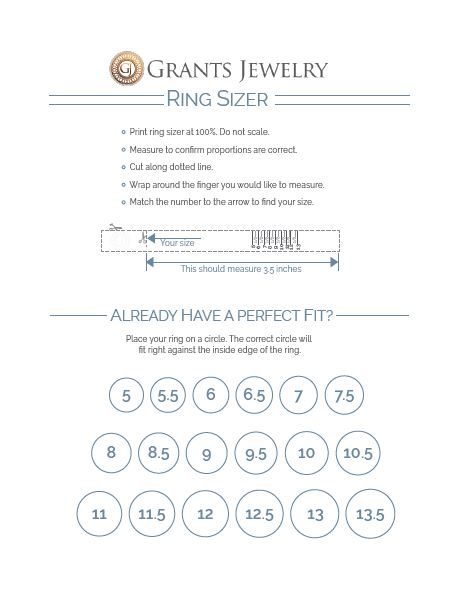
Simply print, check the scale and measure. If you can't be measured by a jeweler, or you want to keep…
Need to know your ring size? Or her ring size? While the best way to ensure a proper fit is to be measured by your jeweler, sometimes it’s just not possible. So if you can’t get to your jeweler in person, or you want to figure out her size without tipping your hand, use our new Ring Sizing Tool.

Simply click here to download the Ring Sizer Page, print at full size and follow the instructions.

Ready to shop for THE ring? Creating a one-of-a-kind engagement rings is fun, easy and affordable. And the result is a ring that will make her fall in love with you all over again! Seven in ten men need help when choosing an engagement ring, but you don’t need to go it alone. Browse some of our creations for inspiration, get started HERE or contact Susan today.
Interested in more stories like this? Join Us On Social Media.



We send periodic email announcements and a monthly newsletter with clips to our favorite News & Events stories. Subscribe today.
[salesforce form=”2″]
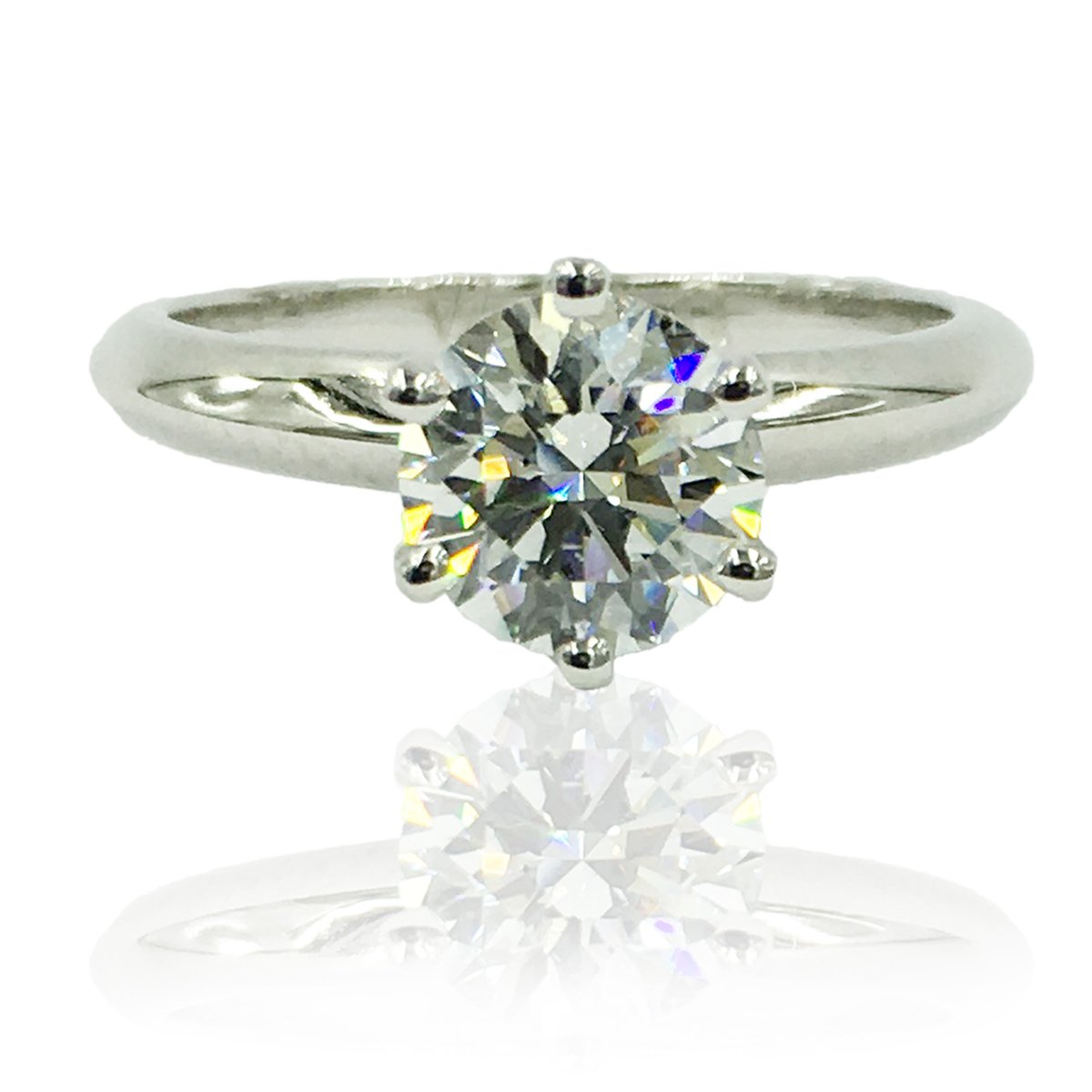
Choosing the right ring doesn't have to be hard - Don't be overwhelmed, let Susan help!
A recent study by Wedding Website The Knot polled 14,000 engaged or recently married brides and grooms across the United States. 72 percent of grooms said they faced challenges in buying a ring, including not knowing if they were getting a good deal (35 percent) and not knowing diamond terminology (28 percent).


Some other statistics:
Average number of rings examined before purchase: 26
Percentage that bought a custom-designed ring: 45 percent
Most popular shape: Round (52 percent)
Average center-stone carat size: 1.2 carats
Average ring total carat weight: 1.8 carats
Most popular ring metal: White gold (61 percent)
If you are in the 72%, good news – you don’t have to go it alone! Let Susan help you design the perfect custom ring, according to your budget and style. Reach out today.
Learn more about Custom Design here.
For more jewelry information from The Knot survey, click here.
Interested in more stories like this? Join Us On Social Media.
We send periodic email announcements and a monthly newsletter with clips to our favorite News & Events stories. Subscribe today.
[salesforce form=”2″]
Check out Vince's Proposal! We've heard that Nicole loves her custom-made Grants Jewelry engagement ring!
Check Out Vince’s Proposal to Nicole!
Interested in more stories like this? Join Us On Social Media.
We send periodic email announcements and a monthly newsletter with clips to our favorite News & Events stories. Subscribe today.
[salesforce form=”2″]
Do you think you would prefer to wear your birthstone gem, or to eat it? Some people now have a choice, thanks to Nestle Japan!
Read story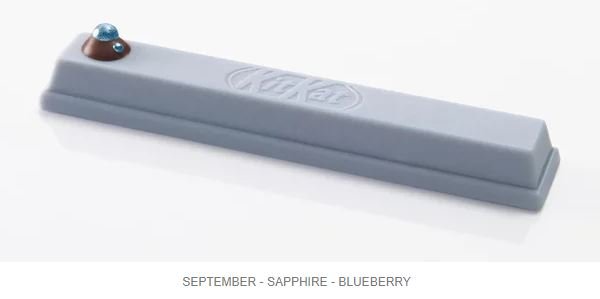
Did you know that carrying something with your birthstone grants you divine protection and good fortune? Nestle Japan does, and they are using that knowledge to introduce a unique and indulgent concept, the Kit Kat Chocolatory Birthstone Series.
The series, available in Japan, will release gorgeous and limited edition bars with a color scheme and flavor profile themed after the birthstone of the month it’s releasing. Each one is topped with a dollop of chocolate and mini sugar pearls that resemble the stone itself!

The first release in the series is for November’s stone, topaz. The roasted chestnut flavor has a pair of gold “topaz” gems as accents.
A new flavor will be available each month. The roster after this month:
December: Tanzanite (purple sweet potato)
January: Garnet (raspberry)
February: Amethyst (honeysuckle)
March: Aquamarine (grapefruit mint)
April: Diamond (rum raisin)
May: Emerald (pistachio)
June: Blue Moonstone (coconut)
July: Ruby (tomato)
August: Peridot (lemon)
September: Sapphire (blueberry)
October: Tourmaline (peach)

These combinations actually do sound pretty good… Well, maybe not July. We’ll have to wait for the reviews on tomato and chocolate. . . .
The Kit Kat Chocolatory is a specialty Kit Kat shop supervised by renowned chef Takagi Yasumasa. The level of consideration that goes into ingredients and recipes makes these Kit Kat bars premium candies.
Source: Tokyo Otaku Mode
Interested in more stories like this? Join Us On Social Media.
We send periodic email announcements and a monthly newsletter with clips to our favorite News & Events stories. Subscribe today.
[salesforce form=”2″]
Introducing November's Birthstones, Topaz & Citrine.
Read story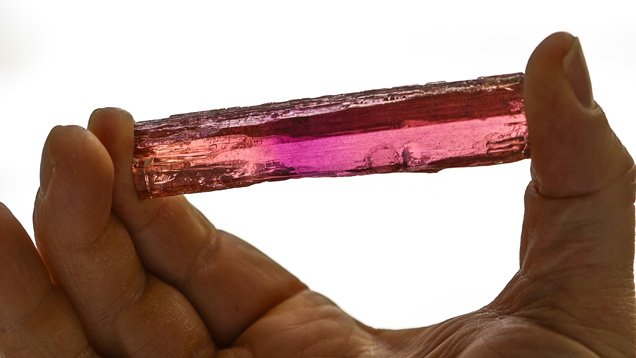
You might be surprised to learn that the blue color that springs to mind for topaz is hardly ever natural: It’s almost always caused by treatment. In fact, topaz has many colors to offer gem lovers, including pinks and purples that rival fancy sapphire!

Topaz is allochromatic. Its color is caused by impurity elements or defects in its crystal structure rather than by an element of its basic chemical composition. Chromium causes natural pink, red, and violet-to-purple colors in topaz. Imperfections at the atomic level in topaz crystal structure can cause yellow, brown, and blue color. Brown is a common topaz color, and is sometimes mistakenly called “smoky quartz.”
Citrine is very rare in nature. It used to be confused with topaz. Today, its durability and affordability makes it the top-selling yellow-to-orange gem. Citrine’s most popular shade is an earthy, deep, brownish or reddish orange.

Most citrine quartz available now is the result of heat treatment of amethyst quartz. Based on the gems from the Victorian era that have surfaced, it’s not hard to imagine that citrine was treasured even in earlier times.
Interested in more stories like this? Join Us On Social Media.
We send periodic email announcements and a monthly newsletter with clips to our favorite News & Events stories. Subscribe today.
[salesforce form=”2″]
Gemstones are often associated with Witchcraft. It's the perfect time of year to explore the meanings those stones carry and how they are used by witches.
Read story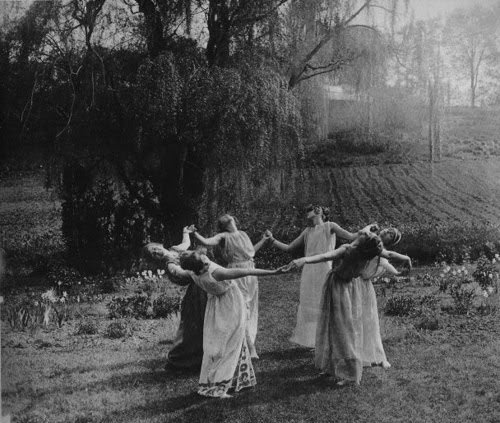
Halloween is generally accepted as being the pagan New Year. Next week, trick or treaters will set out to collect candy and other treats, and this weekend will mark the culmination of many month long Haunted Attractions.
If you are one who believes in such things, this is considered the time of year when the veil between the spirit world and the living world is at its thinnest. A night when ghosts come back to visit us and witches work their magic to communicate with the spirit world.
Gemstones have a long association with witchcraft. Gemstones are believed to hold power and energy that can be used for a variety of purposes, such as healing, protection and to ward off evil, and the aforementioned communication with the spirits.
Here are some of the magical powers that popular stones are believed to hold.
Amber is thought to be a guide or a light for the dead as they progress through the underworld.
Andalusite is believed to allow communication with the dead.

Carnelian was supposedly used by the Egyptian goddess, Isis, to protect the dead on their journey through the afterlife. Now it is thought to appease evil spirits.
Citrine is thought to provide protection from evil thoughts. It’s oranges and yellows are very “Halloween-y” too!

Spinel is believed to react to supernatural powers, allowing you to identify witches and others with powers -they are thought to shake uncontrollably when near a hidden spinel.
Gemstones are thought to possess individual energies. They can carry they energies of past owners. It follows therefore that a very old, ancient, or family heirloom gemstone should really be treasured. Who knows what powers and wisdom it might hold!

You don’t need to believe in witchcraft to enjoy the gemstones listed above. You can find numerous pieces of fine jewelry using these and other stones in the Fine Jewelry collection on the website.
Sources: Gemselect & GIA
Interested in more stories like this? Join Us On Social Media.
We send periodic email announcements and a monthly newsletter with clips to our favorite News & Events stories. Subscribe today.
[salesforce form=”2″]
How neutron stars make gold — and why this neutron star collision is such a big deal.
Read story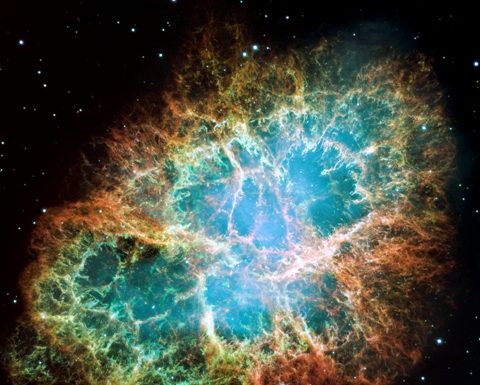
On August 17th, 130 million light years away, two dead stars collided in a constellation known as Hydra. The collision, known as a kilonova, rattled the galaxy in which it happened and sent fireworks across the universe. It set off sensors in space and on Earth, and gave astronomers hopes of answering one of the long-sought mysteries of the universe.

Astronomers have long believed that these collisions were the source of many of the heavier elements in the universe, including precious metals like gold, silver and uranium. Your wedding band, the Pharaoh’s treasures – they are the result of a collision between neutron stars – dense cores of stars that have exploded and died. These stars are masses as great as the sun packed into a region the size of Manhattan. They are full of magnetic and gravitational fields, and collide at nearly the speed of light.
After studying the fireball from this recent explosion, astronomers have concluded that it had created a cloud of gold dust many times more massive than the Earth, lending proof to their belief that kilonovas are the source of our precious metals.
Numerous studies are ongoing and results are being published in many different fields of study. Of the collision, David Reitze of the California Institute of Technology said “It’s the greatest fireworks show in the universe.”

Daniel Holz, an astrophysicist at the University of Chicago said, “I can’t think of a similar situation in the field of science, where a single event provides so many staggering insights about our universe.”
David Shoemaker, a physicist at the Massachusetts Institute of Technology tells it as the story of a gold rush in the sky. It is estimated that an amount of gold equal to 40 to 100 times the mass of the Earth could have been produced over a few days and blown into space. In the coming eons, it could be incorporated into new stars and planets and in some far, far day become the material for a distant generation’s jewels, perhaps even that of another planet or life form.

For more details about the kilonova, and the results of the subsequent studies, see the New York Times Article “LIGO Detects Fierce Collision of Neutron Stars for the First Time” by Dennis Overbye, October 16, 2017, and NPR article “A New Era For Astronomy Has Begun”, by Marcelo Gleiser.
Interested in more stories like this? Join Us On Social Media.
We send periodic email announcements and a monthly newsletter with clips to our favorite News & Events stories. Subscribe today.
[salesforce form=”2″]
These three types of opal are all very different from one another. It wasn't until recently that we understood how each differed from one another, and from traditional…
Read story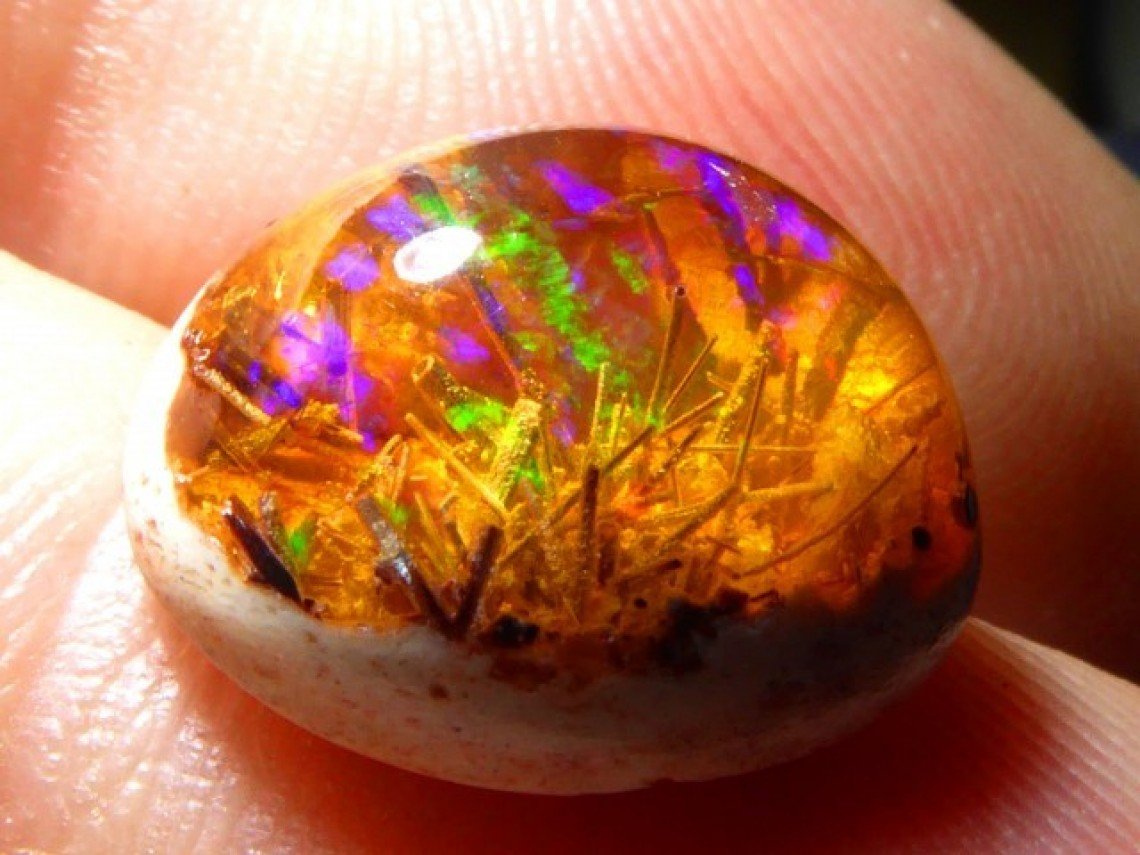
These three types of opal are all very different from one another. It wasn’t until recently that we understood how each differed from one another, and from traditional opals.
Yowah Nut Opal

Yowah nut opal are really small boulder opals that look roughly like a nut from a tree. They can be as small as an apricot seed or as large as a Mango seed. When the “nut” opens up it reveals layers of brown, roundish patterns much like a lemon peel that eventually, as you get to the center of the stone, end up in either an empty cavity or an area filled with opal.
How the ‘kernel’ of the nut get filled with precious opal? That was a complete mystery until geologists and others worked out that a long time in the past the boulder ironstone ‘nuts’ were not as hard as they are today. In fact, at one stage of the development they were quite porous, allowing a mater based chemical mix, seep down into them. In time, this chemical ‘soup’ containing silica, dried out and left a residue which ended up being either common or precious opal.
Phantom Ghost Opals
Some Ethiopian opals have a natural Phantom ghost. These opals are called Phantom Ethiopian opals and are also known as Ghost Phantom Opals.
It is thought that Ethiopian opal is formed differently than sedimentary opal and this allows for this unique ghost inclusion in these opals. It does not form in any other opals. Most are formed with smooth coverage inside the opal but the more rare ghosts are ones formed like bubbles or cloud formations.
The Opal is mostly transparent crystal opal on the outside layer and the inner ghost cloud like inclusion is inside the crystal shell of the opal. The Ghost phantom can be milky white to grey and black or even semi translucent in itself. It does not affect the overall color of the crystal fire and sometimes it looks like the ghost can have opal colors but this is the crystal around the ghost that gives this effect.

There are so many different names in use for this type of opal: fire opal, jelly opal, crystal opal, cherry opal. The final mysterious opal is unique Mexican Opal that has brilliant fire colour but also has rutillated needles inside the Opal. It is really a mystery on how this Opal was formed this way. Opal is silica and Mexican Opal is volcanic, so to have rutilated needles form inside the silica or Opal it needed to have cavities.

Interested in more stories like this? Join Us On Social Media.
We send periodic email announcements and a monthly newsletter with clips to our favorite News & Events stories. Subscribe today.
[salesforce form=”2″]
It was often confused with other gems, due to a wide range of colors. Tourmaline is October's "other" birthstone.
Read story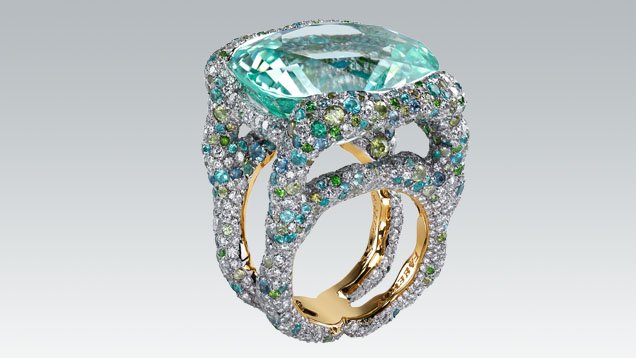

In the 1500s, a Spanish conquistador somewhere in Brazil confused green tourmaline crystal with emerald. That confusion lived on until scientists recognized tourmaline as a distinct mineral species in the 1800s. The confusion about the stone’s identity is reflected in its name – Tourmaline is derived from the Sinhalese toramalli, which means “mixed gems”.

It’s easy to understand why people confuse tourmaline with other gems: the stone has a dazzling range of colors, from rich reds to pastel pinks and peach colors, intense emerald greens to vivid yellows and deep blues. People have probably used tourmaline as a gem for centuries, but they identified it as some other stone (ruby, sapphire, emerald, and so forth) based on its coloring.
In the late 1800s, tourmaline became known as in America as a result of the efforts of Tiffany gemologist George F. Kunz. He wrote about the tourmaline deposits of Maine and California, and praised the stones they produced. Tourmaline’s biggest market at the time was China. Much of the pink and red tourmaline from San Diego County in California was shipped to China because the Chinese Dowager Empress Tz’u Hsi was especially fond of the color. There, craftsmen carved the tourmaline into snuff bottles and other pieces to be set in jewelry.

Tourmaline’s colors have many different causes. One of tourmaline’s most sought-after and generally available colors is the pink/red variety known in the trade as rubellite. Green tourmaline’s pastel hues are alternatives to the deep, rich hue of emerald and the softer green of peridot. At their best, green tourmalines are transparent, brilliant, and clean, with attractive bluish green hues. Stones that show attractive colors in both directions—such as bright green in one and blue in another—are the most valuable.
Since it was discovered in the late 1980s, Paraíba tourmaline’s striking neon blues and greens have electrified the gem world. The gem’s unique, vivid coloring instantly set it apart from other tourmalines. Paraíba tourmalines appear in a range of greenish blue, bluish green, green, blue, and violet hues. Because of the rough’s high value, Paraíba tourmalines are almost always custom cut. With Paraíba, however, color is the key factor, not size. So all other factors being equal, the gem with the better color is a better choice.
Cutters often fashion tourmalines as long rectangles. Making the cut parallel to the length of the rough crystal helps to reduce waste. But cutters also have to consider tourmaline’s optical properties – it can show different colors in different crystal directions. A crystal that appears pale green across its width can be very dark green—sometimes almost black—when you look down its length.
Tourmaline can be featured in many different types of custom jewelry, and is especially good for pieces with vibrant colors. Contact us for a consultation today and see how tourmaline could work for you!

Source: GIA.edu
Interested in more stories like this? Join Us On Social Media.
We send periodic email announcements and a monthly newsletter with clips to our favorite News & Events stories. Subscribe today.
[salesforce form=”2″]
Opal is the birthstone for October, and Australia's National Gem.
Read story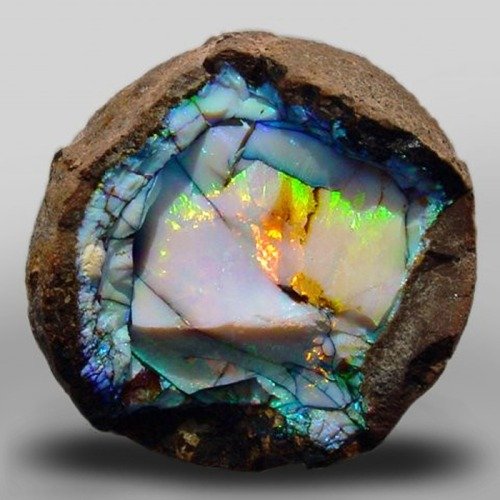
 During dry periods, much of the water evaporated, leaving solid deposits of silica in the cracks and between the layers of underground sedimentary rock. Those silica deposits formed opal. So opal is actually a hardened gel, as opposed to a gemstone.
There are two broad classes of opal: precious and common. Precious opal displays a unique display of flashing rainbow colors called play-of-color, common opal does not. That play-of-color occurs in precious opal because it’s made up of sub-microscopic spheres stacked in a grid-like pattern—think layers of Ping-Pong balls in a box. As lightwaves travel between the spheres, the waves bend, breaking up into the colors of the rainbow, called spectral colors.

The colors we see when we look at the opal vary according to the (microscopic) size of those spheres. Approximately 0.1 micron (one ten-millionth of a meter) in diameter produces a violet color. At 0.2 microns in size we see red. In between is the rest of the rainbow.

White or light opal is translucent or semitranslucent. It’s play-of-color shows against a white or light gray background or body color.
Black opal can range from translucent to opaque, with play-of-color against a black or dark background.
Fire opal is transparent to translucent, but has brown, yellow, orange, or red body color. Fire opal often doesn’t show any play-of-color. It is also known as “Mexican opal.”

Boulder opal can range from translucent to opaque, with play-of-color against any background from light to dark. It’s known as boulder opal because fragments of the surrounding rocks or boulders are part of the finished gem.
Crystal or water opal is transparent to semitransparent, and has a clear background. The clear background of the crystal or water opal creates exceptional play-of-color displays.
A large percentage of the world’s opal comes from three distinctive regions in Australia, Lightning Ridge (the home of black opal) the South Australian fields of Coober Pedy, Mintabie, Lambina and Andamooka (the main sources of light base opal) and the Queensland fields, where boulder opal originates.
Solid opals can be found in Brazil, Mexico, Honduras as well as Peru and Tanzania Africa. Ethiopian opals have been a recent find for opal lovers. The crystal opals from the Welo region are very popular due to their bright patterns.

The major opal producing field for black opal is Lightning Ridge in New South Wales, Australia. Opal from Lightning Ridge is often considered to be the best and brightest in the world. The most sought after black opal is red or multicolor on black, which is very difficult to find. Such stones are always cut on the fields and sold immediately. “The Path of Enlightenment” necklace contains 180 magnificent opals from Lightning Ridge.

Earlier this year, gem-quality common opal was discovered in Michoacán State in western central Mexico. These opals were embedded in volcanic andesitic rocks. They were generally characterized by a medium to light orange to brown color, with no visible inclusions. While these new deposits are considered “common opal” since the material does not show play-of color, some gemologists may also consider the specimens to be fire opal due to the orangy bodycolor.
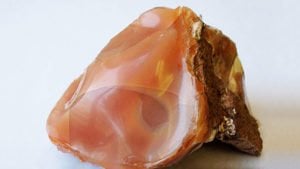
Another relatively new source for precious opal is located in Ethiopia’s Wollo Province. It produces opals with vibrant play-of-color and interesting inclusions.
Source: GIA.edu, National Gemological Society
Interested in more stories like this? Join Us On Social Media.
We send periodic email announcements and a monthly newsletter with clips to our favorite News & Events stories. Subscribe today.
[salesforce form=”2″]
Fall 2017 Jewelry Trends: Shapes, Stacks, Cut and Color
Read story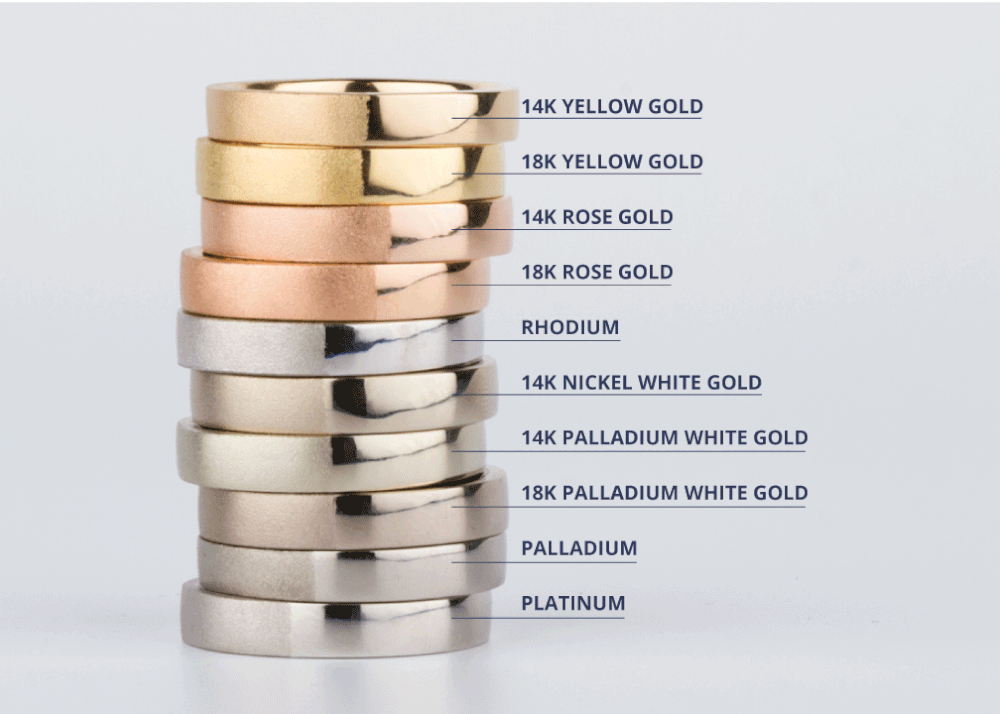
Jewelry is a great way to express yourself and play up with your look without changing your style. Like fashion, jewelry trends change over time. Social Media can be a great indicator of what’s trending, and Instagram and Pinterest point to some great trends this fall.
Diamonds or Gemstones, Simple Single Hoops or Multiple & Tangled Styles, Delicate Small Hoops or Shoulder Skimmers – In any style, the hoop is making a massive comeback this fall. Recently both Selena Gomez and Chloe Bridges were seen rocking hoops on their respective Instagram pages. Hoop earrings are totally versatile and will go with everything from leisure wear to business suit to evening gown.

Diamonds never really go out of style, but the most popular cut or shape changes over time. Currently, pear shaped diamonds and oval diamonds are all the rage, especially in engagement rings. These shapes are showing up in engagement rings, and pair well with thinner band styles.

For the past several years, white gold has been popular, especially with diamonds. Now, rose and yellow gold are coming back into favor. And mixing gold tones, once forbidden, is now all the rage. Mixed tone bangles, rings settings, and bracelets are all great ways to mix white, rose and yellow golds together.

The final trend showing up this fall is stacked jewelry. Rings and bangles stack beautifully, and you can mix your colors and gemstones to create a totally unique style. Get creative!

Bonus Find: A bracelet that is already stacked and intermingled for you, using multiple colors and styles. Learn more about this exquisite bracelet!
Talk to Susan about how you can create a trendy piece of jewelry that is expressly you! Contact us today!
Interested in more stories like this? Join Us On Social Media.
We send periodic email announcements and a monthly newsletter with clips to our favorite News & Events stories. Subscribe today.
[salesforce form=”2″]
Extinct Denisovans from Siberia Made Stunning Jewelry. At 50,000 years the know-how involved in these items are breathtaking. Any older, and it challenges our entire understanding of the…
Read story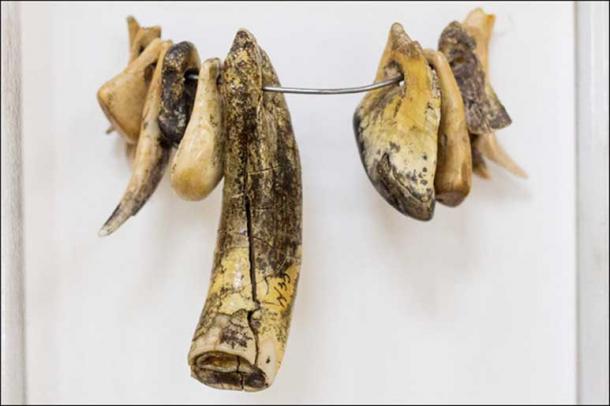

Back in Denisova cave, some 150 km (93 mi) south of the city of Barnaul, finds like a bracelet, a ring, and beads as well as the world’s oldest needle, were all made in layers of this underground complex identified as being occupied by Denisovans, after tiny fragments of these archaic humans were found and analysed.

Pictures shown here illustrate their remarkable Paleolithic handiwork from artifacts – for example a stunning green-hued chlorite bracelet, a marble ring, and beads from an ostrich eggshell necklace. Initially this jewelry was dated as being between 40,000 and 50,000 years old, with the latter currently the officially accepted figure. Now, however, scientists from Russia, the UK and Australia are reexamining the dates of these objects amid suspicions that they are as old as 65,000 to 70,000 years.
At 50,000 years the know-how involved in these items – the bracelet has a hole made by drilling and rasping devices – are already breathtaking. Any older, and it challenges our entire understanding of the technological development of man.

‘The bracelet is stunning – in bright sunlight it reflects the sun rays, at night by the fire it casts a deep shade of green,’ said Professor Anatoly Derevyanko, former director of the Institute of Archeology and Ethnography, in Novosibirsk. ‘It is unlikely it was used as an everyday jewelry piece. I believe this beautiful and very fragile bracelet was worn only for some exceptional moments,” he said.
The manufacturing technology used in the bracelet is seen as being more typical of a later period, for example the Neolithic era, which began around 12,000 years ago. His successor Professor Mikhail Shunkov has suggested that the long-extinct Denisovans were significantly more advanced than Homo sapiens and Neanderthals.

From: ‘Extinct Denisovans from Siberia made stunning jewellery – but did they also discover Australia? ’
The Siberian Times
Interested in more stories like this? Join Us On Social Media.
We send periodic email announcements and a monthly newsletter with clips to our favorite News & Events stories. Subscribe today.
[salesforce form=”2″]
Custom Ring Design - Create an engagement ring with an insert wrap especially for her!
Read story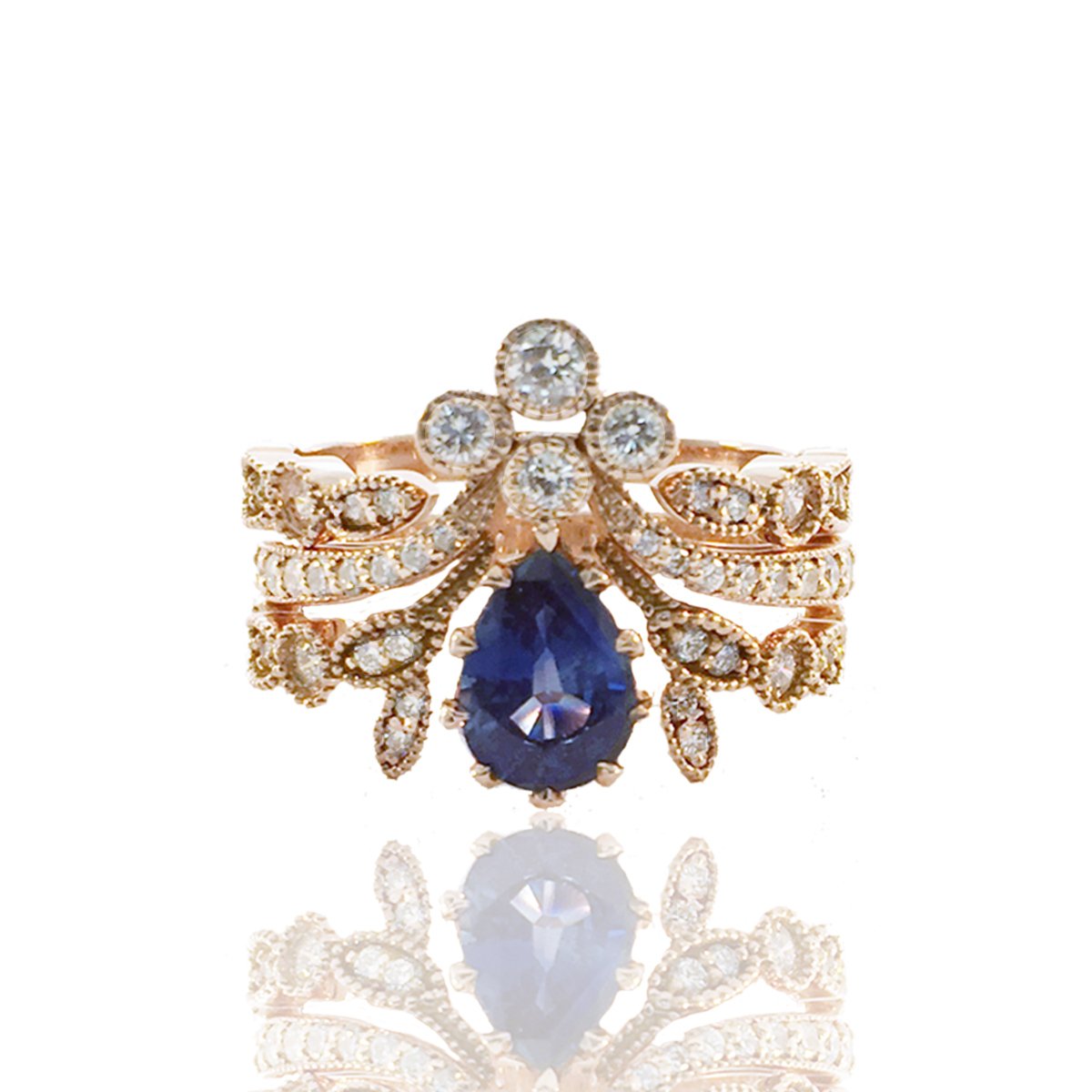
If you saw Czarina’s Jacket in latest arrivals or on social media earlier today, you’ve probably figured out that an Insert Ring, or Ring Jacket, is a ring enhancer designed to fit around an engagement or other ring.

An insert ring is usually a split, double band which provides a gap between the two bands for the engagement ring to slide into. With this style of enhancer, accent stones frequently completely encircle the center stone. Insert rings can serve several purposes. They can be used in addition to a wedding band, or can be used as the wedding band itself, creating a coordinated wedding ring set. Sometimes they are chosen as anniversary gifts or used when renewing wedding vows. In some instances, enhancers have been chosen to wrap around an heirloom ring, such as a mother’s engagement ring.
Whatever your goal, creating a custom engagement ring & wedding band insert set can be simple, affordable and fun. (And custom design is fun for us too!) But the best part will be your significant other’s reaction when they learn that their rings are one of a kind, created especially for them.

When I work with a client to design a ring (or other jewelry) we usually start with a pen and paper, and sketch design options out until we have a clear idea of the look and feel they are after. After we work through the custom design process, comes Cad-Cam rendering and mold making. As the piece comes to life, our expert jewelers will make sure it is exactly as you hoped it would be.

Learn more about the Custom Design process HERE.
Missed Czarina and Czarina’s Jacket? Click HERE to see this stunning set!

Interested in more stories like this? Join Us On Social Media.
We send periodic email announcements and a monthly newsletter with clips to our favorite News & Events stories. Subscribe today.
[salesforce form=”2″]
Michael Buble wears one. So does Johnny Depp. So why shouldn't you share your "taken" status with the world?
Read story
That’s right: Men, too, can enjoy the thrill of wearing a sparkly ring to let everyone know they’re off-limits and belong to another person. Men’s rings tend to be plain gold, silver or platinum bands, possibly with small diamonds.

A recent study by the parent company of popular wedding website “The Knot” found that five percent of men were already wearing engagement rings. Jewelers report that they are designing more engagement rings specifically for men. Why? Men are increasingly proud to be engaged, and want to be on an equal footing with their partners. For some, that means an engagement ring. “Women have engagement bands to show that they’re taken, in love and happy – and men sadly don’t, which I feel they really miss out on,” says 24 year old Emmie. “Everyone asks me about my engagement ring, but no one really asks him too much about it apart from saying ‘well done, mate’”.

The legalization of same-sex marriage in many states has also had an effect on the rise of these rings. When the traditional concepts of a man proposing to a woman are off the table, new rules apply to the jewelry as well. But this is certainly not some new marketing ploy. It’s difficult to pinpoint the origin of this little-known piece of jewelry, but it predates the 21st century. In the 1920’s, jewelers joined together for a cooperative advertising campaign to try and popularize the concept of a man’s engagement ring. Ads ran in East Coast newspapers, featuring black and white photos of a man’s left hand, a cigarette resting between the first two fingers and a large rock flashing on the fourth. The rings had ultra-macho names like the Pilot, the Stag, and the Master. The campaigns were unable to overcome the ingrained femininity of the symbol, and the movement flopped.
So you’re in? Great. But countless hours were spent helping men understand how to buy an engagement ring for you. What should you consider when buying his ring? The most important factors, aside from your budget, are as follows:
Lifestyle. Does he work with his hands? Is there a chance his ring could be damaged? Consider precious metals like gold or platinum that can easily be repolished. If he’s a nine-to-five office type, an alternative metal like cobalt, titanium, Damascus steel, or meteorite could be a great option.
His wardrobe. Does your guy live in T-shirts and jeans? Then he probably doesn’t want something flashy, so explore more simple styles. If he wears a suit to the office every day, and has a more polished casual wardrobe, he may prefer a ring with a more refined style.
The story. Some are men of few words, but other guys love a good story. For example, maybe he’d love to tell friends that his ring is made from the same material used to craft the custom sword you gave him last Christmas. Or that his ring is the same style that a popular media figure is wearing. Providing your jeweler with clues to his personality will help them to provide suggestions for the perfect ring for your intended.
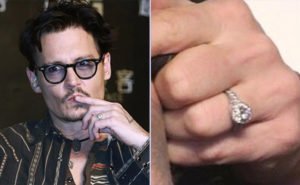 Johnny Depp’s Engagement Ring
So whether you are engaged & looking for a ring for your fiancee, or you’re ready to turn the tables and propose to him, Susan can help you create the perfect “man”engagement ring for your significant other. Reach out today – [email protected].
Sources: The Atlantic, The Independent, Huffington Post, The Knot
Interested in more stories like this? Join Us On Social Media.
We send periodic email announcements and a monthly newsletter with clips to our favorite News & Events stories. Subscribe today.
[salesforce form=”2″]
Stanford University researchers have discovered that the depths of the "ice giant" planets are perfect for the formation of diamonds.
Read story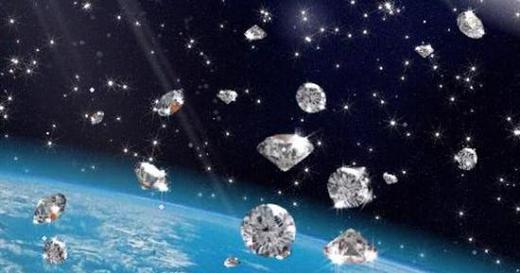
Scientists Say It’s Raining Diamonds on Neptune and Uranus.
Neptune and Uranus are two of the most mysterious places in our solar system. We only met Uranus in 1986, when Voyager 2 spent 5 hours exploring the planet. During that exploration we found eleven new moons, and learned interesting things about the planet’s atmosphere: it was extremely cold, with a composition primarily of hydrogen and helium. Neptune has an atmosphere similar to Uranus. Both atmospheres are dominated by ices, in fact the planets are known as “Ice Giants”.

Now, Stanford University researchers have discovered that the depths of these “ice giants” are perfect for the formation of diamonds. While they long suspected that the large amounts of hydrogen, helium, and methane (which give the outer planets their distinctive blue hue) found in the atmosphere are ideal for diamond formation, this is the first time that anyone has been able to recreate those situations in a lab setting.

How Can It Rain Diamonds? Don’t They Form Under Pressure?
Yes, but pressure takes many forms. In this case, when storms roll through clouds of methane molecules surrounding the planets, lightning strikes cause carbon atoms to disassociate from their chemical bonds. Those atoms create “clouds” of soot which sink into the lower atmosphere. The hot methane in the environment creates a high atmospheric pressure which squeezes the carbon into graphite and then again into diamond. Thanks to gravity, those diamonds could truly fall to the middle of the planet as “diamond rain.”

Using a tool called the Matter in Extreme Condition instrument, the scientists shocked a thin polystyrene sheet with a laser blast which heated the material. The heated polystyrene breaks apart into hydrogen and carbon atoms which then are compressed. For an incredibly short moment, this causes nano-diamonds to form. Right now, most theories suggest that diamond would remain solid, at least inside the planets, but now that we can recreate the atmospheric conditions, we may learn otherwise. If the temperature inside the planet is high enough, it could result in it oceans of liquid carbon with gigantic diamond icebergs.
It’s actually very difficult to test what’s being created in real time with the laser pulse, so ultrabright X-rays are being used. Similar to an incredibly bright and extremely short camera flash. Currently scientists can only reproduce this exotic state for about a nanosecond at a time, and need the X-rays to explore the “atmosphere” they have created quickly. Then, using simple X-ray diffraction (the method used to identify crystal structure) they found a surprisingly clear diamond structure.
Maybe We Need More Space Exploration
We already knew that Saturn and Jupiter’s environments were favorable for diamond creation. But our little group of eight planets are not the only place that researchers believe conditions are right for diamond creation. The extremely hot planet (like 2315 degrees Celsius hot) Wasp-12b has such a high carbon-to-oxygen ratio that scientists believe the planet’s surface might be littered with diamonds. The lead researcher specifies: “You might see land masses and mountains made up of diamonds.”

And what about adding diamonds to the atmosphere? Harvard researchers have explored the idea of using diamond dust to cool the planet, and reverse some of the effects of global warming. Mimicking the cooling effects of a volcanic eruption, putting nanometer sized particles of diamond into the atmosphere would create a haze that blocks the sun’s rays.
Sources: Gizmodo, Space.com, Wikipedia
Interested in more stories like this? Join Us On Social Media.
We send periodic email announcements and a monthly newsletter with clips to our favorite News & Events stories. Subscribe today.
[salesforce form=”2″]
Colorado State University Alum Kyle Griffin and Laura Krause met during their senior year at CSU. Laura was the third generation in her family to graduate from the…
Read story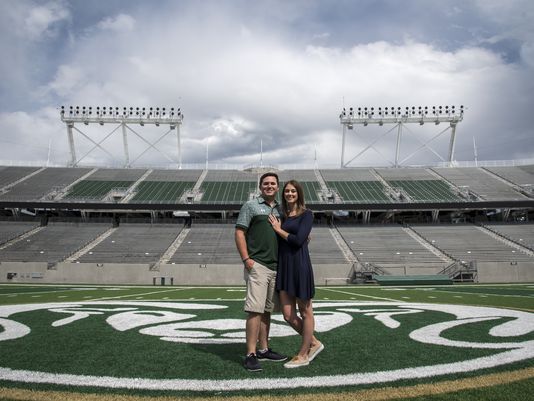
Colorado State University Alum Kyle Griffin and Laura Krause met during their senior year at CSU. Laura was the third generation in her family to graduate from the school. When it came time to ask Laura to be his wife, Kyle knew he wanted CSU Football to be a part of his proposal, he just wasn’t sure how. Coincidentally, the university announced a fundraising campaign just as he was planning the proposal. The school was selling inscribed bricks to pave a walkway at their new Football Stadium, and he knew instantly what to do.

“It would last as long as the stadium and would be there one day when our kids go to (CSU games).” said Griffin. So Griffin purchased a brick with a simple inscription: “We met at CSU and I knew you were the one. Laura, will you marry me? Kyle”

Griffin planned to have their families present the day he proposed, and Laura caught sight of them, and realized something was up. Griffin’s plan was blown. Krause said she knew a proposal was coming, but the brick was a complete surprise. As Kyle led her down the path of engraved bricks, he got down on one knee at “their” brick. Laura, of course, said yes.
Congratulations Laura & Kyle!
Interested in more stories like this? Join Us On Social Media.
We send periodic email announcements and a monthly newsletter with clips to our favorite News & Events stories. Subscribe today.
[salesforce form=”2″]
A young cubs fan proposed to Kris Bryant. Even Bryant's wife Jessica could not say no.
Read story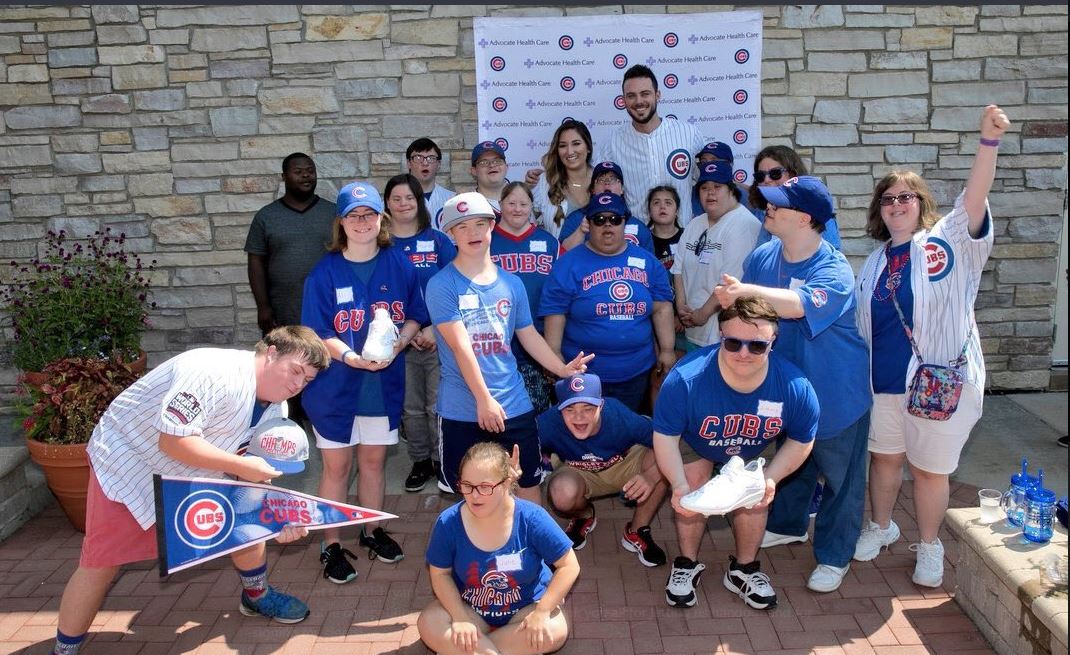
You know we love a good proposal story. Cubs Third Baseman Kris Bryant made a young fan’s dream come true at a recent Advocate Health Care event. The fan, who got down on one knee to pop the question, proposed right in front Bryant’s wife Jessica. Jessica said yes too!
Source: Twitter
Interested in more stories like this? Join Us On Social Media.
We send periodic email announcements and a monthly newsletter with clips to our favorite News & Events stories. Subscribe today.
[salesforce form=”2″]
A garden fresh carrot came up with more than anyone expected recently in Alberta, Canada. Mary Gram found the engagement ring she lost 13yrs ago!
Read story
In 2004, Mary Grams was weeding her garden, and lost her engagement ring. The Alberta, Canada resident was distraught. She and her husband had been married for more than 50 years, and the ring he proposed with was one of her most prized possessions. She went out replaced the ring with a smaller, similar version, because she did not want her husband to know she had lost the original. Ultimately, she did tell him the truth.

Fast forward 13 years, and Mary’s daughter-in-law Colleen was pulling vegetables from the garden when she got far more than she bargained for. Stuck firmly around a garden fresh carrot was the lost engagement ring! Mary thought that Colleen was kidding at first, until she saw the ring. After removing the carrot, she was pleased to discover that the ring still fits!

Unbelievably, this is not the first time a ring was found this way! Back in 2016, a German widower who lost his wedding ring while gardening found it growing on a carrot three years later. In 2011, a Swedish woman’s wedding ring was found on a carrot 16 years after it first went missing on her farm.
Mary’s husband passed away five years ago, so he’ll never know that this story had a happy ending. Mary still plans to wear the ring daily.
Source: CBC News
Interested in more stories like this? Join Us On Social Media.
We send periodic email announcements and a monthly newsletter with clips to our favorite News & Events stories. Subscribe today.
[salesforce form=”2″]
Age is just a number, and this newlywed couple is a perfect example. At 94 and 98 years old, they were married in early August after dating for…
Read story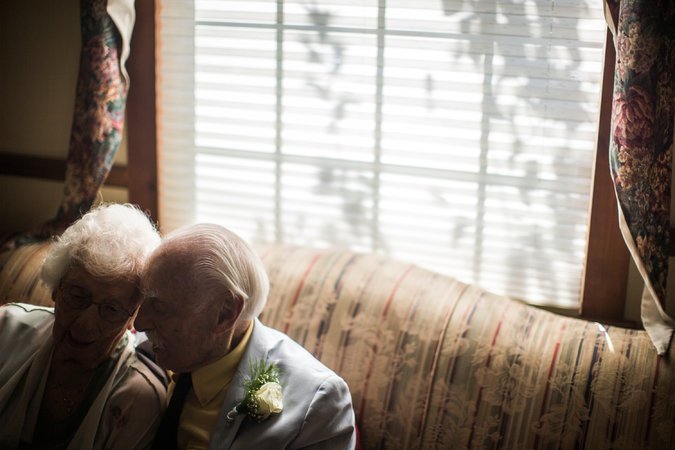

Gertrude Mokotoff and Alvin Mann met eight years ago at the gym, where they still work out twice a week. It sounds like the introduction to a typical love story, until you realize that Gertrude is 98, and Alvin is 94.
Their first date was at a small cafe, Something Sweet, where dinner lasted over two hours as the couple got to know one another.

The pair instantly formed a bond with one another, which continued to grow over time. This past June, Gertrude took things to the next level, and proposed to Alvin as the two were headed home from NY’s Metropolitan Opera House. He said yes, and so the pair were married August 5th, at Middletown Civil Hall in Middletown, NY. About 50 family members and friends joined them for the ceremony – her daughter and his son were the Matron of Honor and Best Man. Alvin and Gertrude left the ceremony in Alvin’s Toyota, complete with a “Just Married” sign and soda cans tied to the bumber.
 The couple agrees that when it comes to age, it’s just a number. “People always ask what it is that keeps us young,” Mr. Mann said. “Of course, one part of it is medical science, but the bigger part is that we live worry-free lives; we do not let anything we cannot control bother us in the least.” Clearly that is true – age has not been a barrier for either yet. Alvin is the oldest person to have graduated from Mt. Saint Mary College, where he earned his bachelor’s degree last year. At 71, Gertrude became Middletown’s first female mayor.
Not much will change for the newlyweds, who plan to stay in their own homes. They will still work out twice a week at the YMCA and play bridge on Sundays, and dine out at Something Sweet.
Congratulations Alvin and Gertrude! We wish you much love and happiness.

Sources: NYTimes, Middletown Times Herald, Hudson Valley News 12
MIT PhD research student Cindy Hsin-Liu Kao wants to take your jewelry to the next level. Her research centers around accessories & wearable that are mobile, living objects…
Read story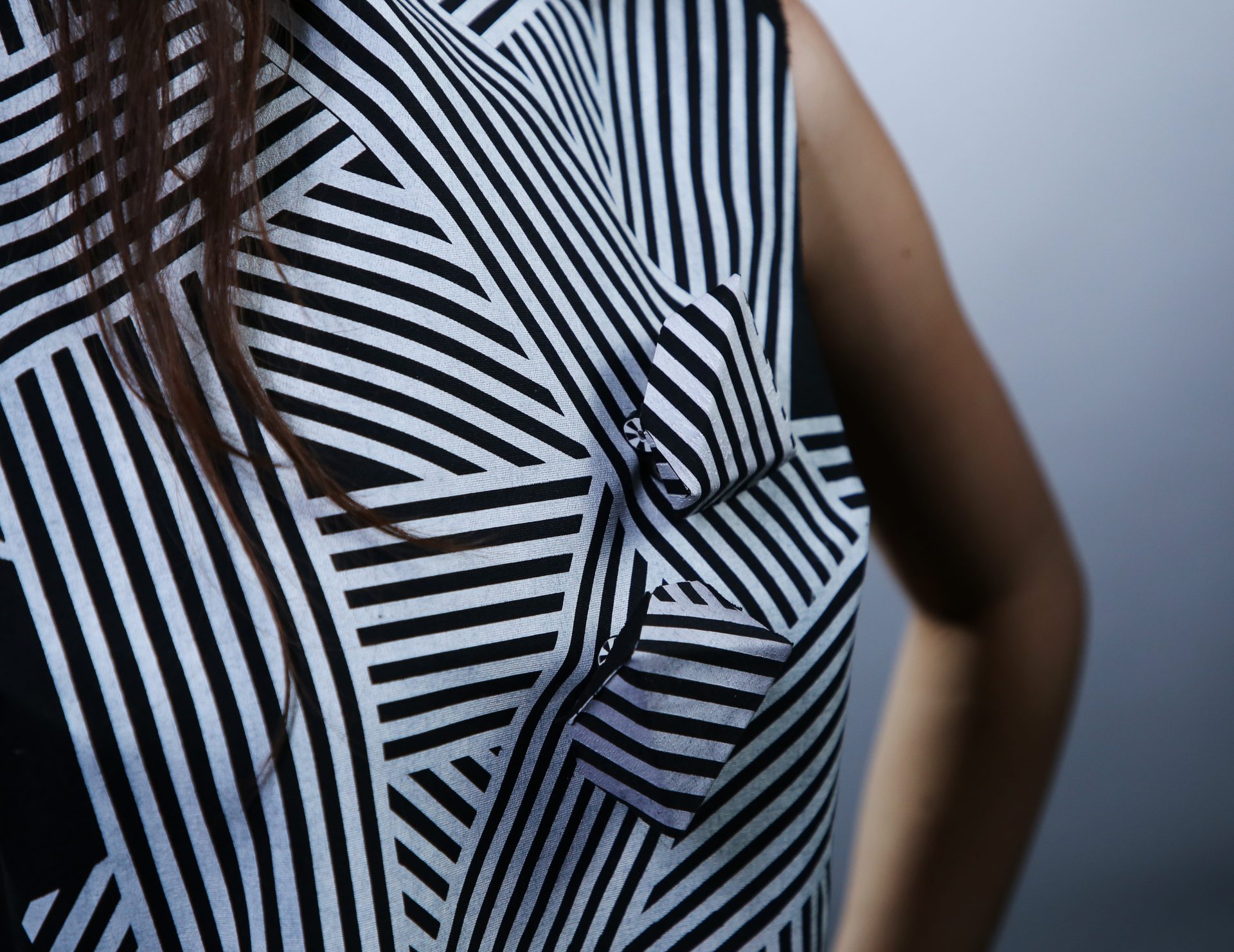
MIT PhD research student Cindy Hsin-Liu Kao wants to take your jewelry to the next level. Her research centers around accessories & wearable that are mobile, living objects on the body. From the project excerpt:
“Traditionally static jewelry and accessories will start displaying life-like qualities, learning, shifting, and reconfiguring to the needs and preferences of the wearer. With wearables that possess hybrid qualities of the living and the crafted, we explore a new on-body ecology for human-wearable symbiosis.”

The Kino Project is exploring “living” jewelry, that is actually made from miniaturized robots. They are capable of roaming across your clothing, changing location and even changing their appearance! Add sensors and the robots can actively respond to the conditions around it. Paired with your mobile device, the robot becomes your own personal Siri.

The fashion implications are impressive as well. Cover designs on the robots combined with clothing creates unique patterns & effects as the bot moves around the wearer’s body. Multiple pieces could work together, forming the building blocks for jewelry that transforms from brooch to necklace depending on the wearer’s instructions.

It’s not likely that you will see these wearables on the runway anytime soon, but the possibilities are certainly intriguing.
Source: Cindy Hsin-Liu Kao, Deborah Ajilo, Oksana Anilionyte, Artem Dementyev, Inrak Choi, Sean Follmer, Chris Schmandt, “Exploring Interactions and Perceptions of Kinetic Wearables”, ACM DIS’17, Edinburgh, UK (June 10-14, 2017).
Interested in more stories like this? Join Us On Social Media.
We send periodic email announcements and a monthly newsletter with clips to our favorite News & Events stories. Subscribe today.
[salesforce form=”2″]
You are probably aware that on August 21, 2107, America will fall under the path of a total solar eclipse. It will be one of the biggest astronomical…
Read story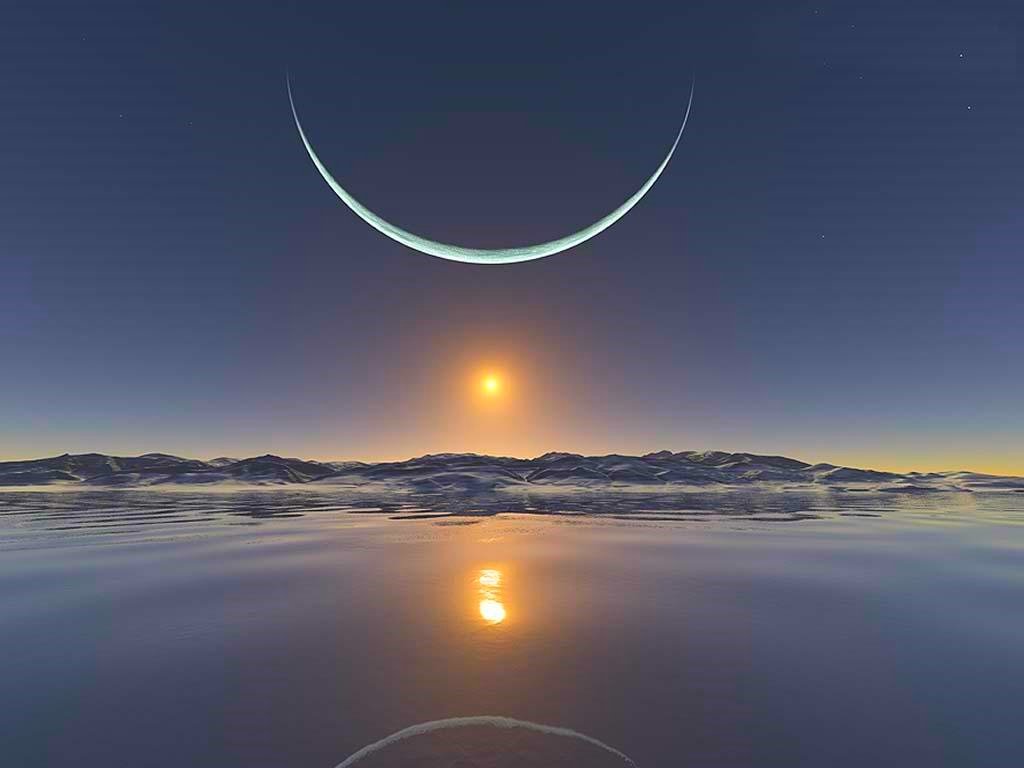
You are probably aware that on August 21, 2107, America will fall under the path of a total solar eclipse. It will be one of the biggest astronomical events of the decade.

An eclipse is the alignment of the Earth, the Moon, and the Sun. Around every 18 months or so, the Moon passes directly between the Earth and the Sun on its orbit around our planet. It’s a relatively rare occurrence because the Moon doesn’t orbit in the same plane as the Earth and Sun. But when the three bodies line up just right, the Moon covers up the disc of the Sun, and those in the direct path of the Moon’s shadow — called the path of totality — will see the Sun go dark.

Not all eclipses are the same: sometimes the Sun is totally covered, called a total solar eclipse, and other times the Moon only partially covers the Sun, which is a partial eclipse. This month’s upcoming eclipse is a total solar eclipse, so the Sun will be completely covered. Even though an eclipse happens every 18 months or so, the upcoming eclipse will pass from the west coast of Oregon all the way to the east coast of South Carolina. It’s the first time a total solar eclipse has passed from one coast to the other in 99 years.
Enter Baily’s Beads. The Moon is not of course a level surface – it has mountains. And valleys. And when the last rays of sunshine before the darkness of the eclipse pass through those mountains and valleys, they form an effect known as Baily’s Beads, which resembles a string of blinding gems around the edge of the moon.

Baily’s Beads and the diamond ring happen because the lunar mountains are the first part of the moon to completely slide across the sun’s face. So as the moon moves between us and the sun, the mountaintops break the sliver of blazing sunshine into the string of dazzling beads. And as the moon continues to move, you’re eventually left with one last bead, the diamond. It’ll look as if it’s set on top of the corona, the sun’s white-hot crown of plasma.

Francis Baily, an English astronomer, first noted this effect during the annular eclipse of 1836. According to Baily, during that eclipse the matching size between the moon and the sun was so close that it looked like beads of light, almost all the way around. He described it as a ring of beads that looked like a necklace.
While the eclipse will take up to an hour, “all the real action is in the last minutes before the moon completely covers the sun, and in the first minutes when it begins to uncover the sun,” said Rick Fienberg of the American Astronomical Society. This entire phenomenon will last for less than a minute, so keep your eyes peeled.
And of course, you can be sure that at least one proposal will result. In 2012, rumors of marriage proposals circulated the internet across Japan with this image. “I proposed at exactly the right moment” was the rumor part. Romantic? Yes! A real moment captured on film? Highly unlikely.

The image was later claimed by a viewer who reported that he used a popular app, Image Blender, to create the proposal scene.
Sources: Popular Science, Stillpoint: The Geometry of Consciousness (Photo), Ame Danielson, Wikipedia, Discover Magazine
Interested in more stories like this? Join Us On Social Media.
We send periodic email announcements and a monthly newsletter with clips to our favorite News & Events stories. Subscribe today.
[salesforce form=”2″]
In this day and age, the rules for getting engaged are changing. You might be surprised to learn that it’s not uncommon for a woman to do the…
Read story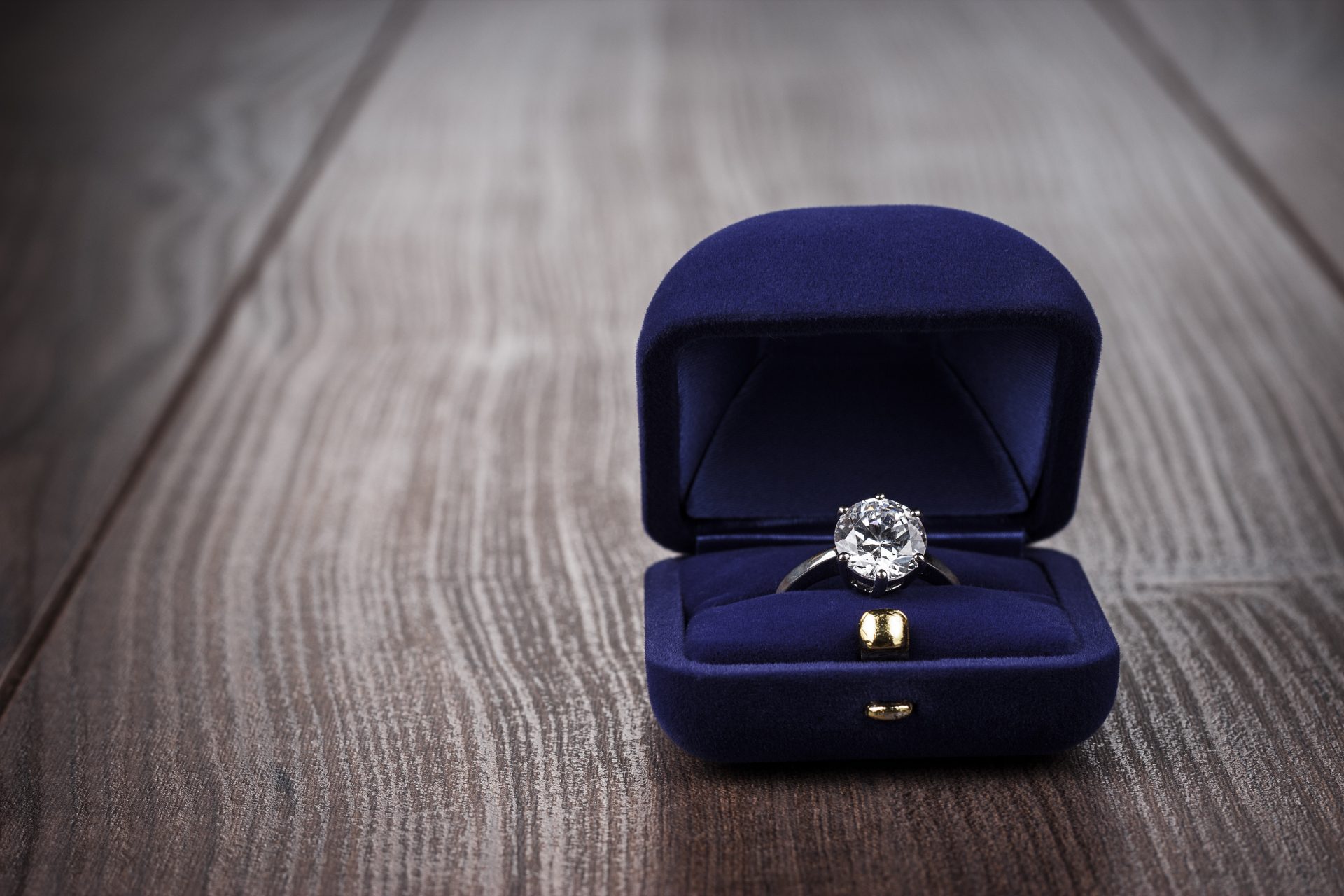

You might be surprised to learn that it’s not uncommon for a woman to do the asking these days. What’s even more common, though, is for the couple to decide together that they intend to marry. And whoever is asking, the “Proposal” isn’t always a surprise these days- sometimes it is not even a proposal at all. Instead, the couple plans the engagement moment together. It’s not also not uncommon to include a couple’s friends and family in the proposal or engagement party process.

Even with these new trends, the classic “on bended knee” proposal is still very much alive and thriving. Plenty are still choosing this route, and the resulting unique, thoughtful, and at times extravagant, proposals fill our social media feeds. An entire industry has sprung to life, helping plan and execute proposals from the simple to the extraordinary. The Yes Girls, The Heart Bandits, Paparazzi Proposals – The list of people willing to help ensure the perfect proposal goes on and on!
One thing hasn’t changed. Engagement rings are still widely popular. Current trends favor Fancy Colored Diamonds and Vintage Designs.

And cue the Engagement Ring Selfie. Just search “engagement ring” on Pinterest, and you’ll find all sorts of examples. (Speaking of Pinterest, gone are the days of magazines and window shopping. Pinterest is the go-to source for all engagement ring and wedding planning research and inspiration.)
More and more, couples are choosing to create a custom ring instead of buying a ring from a chain jeweler. Custom feels more special than just walking into a store and picking something. People now want something different. A ring that’s unique or unusual but still classic and timeless; so it won’t go out of style.
Are you ready to create a custom engagement ring or bridal set? Don’t be intimidated or overwhelmed. Let us guide you through the process of creating the ring that signifies your love. Want to learn more about the process? Take a look at Custom Engagement Rings today.
Interested in more stories like this? Join Us On Social Media.
We send periodic email announcements and a monthly newsletter with clips to our favorite News & Events stories. Subscribe today.
[salesforce form=”2″]
Graeme Thompson, head of jewelry in Asia for British auction house Bonhams, handles beautiful diamonds on a daily basis. Yet even he has only held a red diamond…
Read story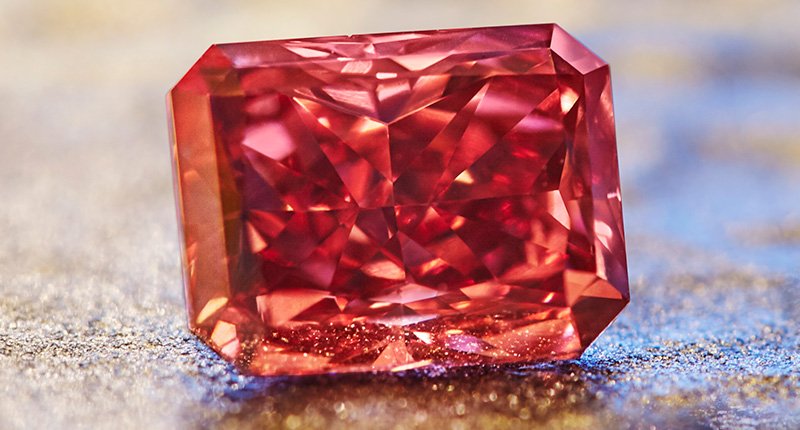

Graeme Thompson, head of jewelry in Asia for British auction house Bonhams, handles beautiful diamonds on a daily basis. Yet even he has only held a red diamond once. In the 33 years that Rio Tinto has been showcasing stones from its Western Australian Argyle mine in Western Australia, less than 20 carats of Fancy Red certified diamonds have been sold. In the world of colored diamonds, “red diamonds are the rarest of them all and whoever gets to hold one in his hand is very lucky indeed,” said Thompson.
Rio Tinto unveiled its largest Fancy Red diamond yet last week. Known as the Argyle Everglow, the polished radiant cut diamond weighs 2.11 carats. It was revealed as part of the mining company’s annual tender of pink diamonds. The Argyle Everglow represents “rarity within rarity” said Argyle Pink Diamonds Manager Josephine Johnson. The stone is half the size of a one cent coin, but could sell for more than $10 million.

Significant red diamonds rarely appear at auctions. Christie’s has sold two in recent years – in 2013, a 1.92-carat Fancy Red rectangular-cut diamond, and a 2.09-carat heart-shaped Fancy Red diamond ring by jeweler Moussaieff in 2014. The color red is essentially a highly, highly saturated vivid pink, where the body color goes beyond the pink color range. There can be modifying color to that red, like pinkish red, orangey red, brownish red – all of these factors influence the value of the diamond.

At Rio Tinto’s annual tender this year, buyers will have a choice of 58 diamonds weighing a total of 49.39 carats. Included are the five “hero” diamonds shown below. They were selected for their unique beauty and named to ensure there is a permanent record of their contribution to the history of the world’s most important diamonds.

The Argyle Diamond Mine produces 90% of the world’s rare pink diamonds and is set to close by 2021, according to Robyn Ellison, communications manager for Rio Tinto. “It is unlikely that a diamond as rare as this will come out of the mine again,” Ellison said.
Sources: CNN, Argyle Diamonds, Rio Tinto Mining Company
Interested in more stories like this? Join Us On Social Media.
We send periodic email announcements and a monthly newsletter with clips to our favorite News & Events stories. Subscribe today.
[salesforce form=”2″]
“Emeralds,” “Rubies” and “Diamonds” will dazzle as never before as three of the world’s top dance companies share the stage for the first time to mark the…
Read story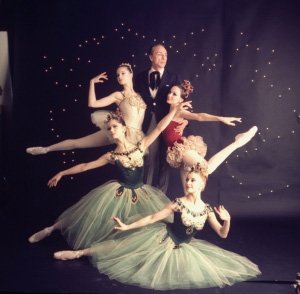

“Emeralds,” “Rubies” and “Diamonds” will dazzle as never before as three of the world’s top dance companies share the stage for the first time to mark the 50th anniversary of “Jewels,” currently on stage at Lincoln Center.
Choreographer George Balanchine created Jewels in 1967; in three acts honoring the French, American and Russian styles that shaped his career. The ballet has been performed many times over since it’s debut.

For the anniversary performances at New York’s Lincoln Center, the Paris Opera Ballet will dance “Emeralds,” the New York City Ballet and the Bolshoi Ballet will alternate in both “Rubies” and “Diamonds”.
The three acts of the ballet are very distinct, much like the precious gems they are named for. Emeralds is described as a very pure dance. Refined & elegant movements are the hallmark of this act. Rubies, in contrast, is described as glamorous and powerful. There are multiple leads in Rubies, and the lead ballerina describes the performance as fast and hard-edged. Finally, Diamonds is a bold movement, which follows the formula of traditional ballets and focuses everything on the lead ballerina.

When Balanchine was creating Jewels for the New York City Ballet 50 years ago, he revealed that he had been inspired by a visit to Van Cleef & Arpels and posed for pictures with ballerinas wearing gem-encrusted tiaras.
Source: NYTimes
Interested in more stories like this? Join Us On Social Media.
We send periodic email announcements and a monthly newsletter with clips to our favorite News & Events stories. Subscribe today.
[salesforce form=”2″]