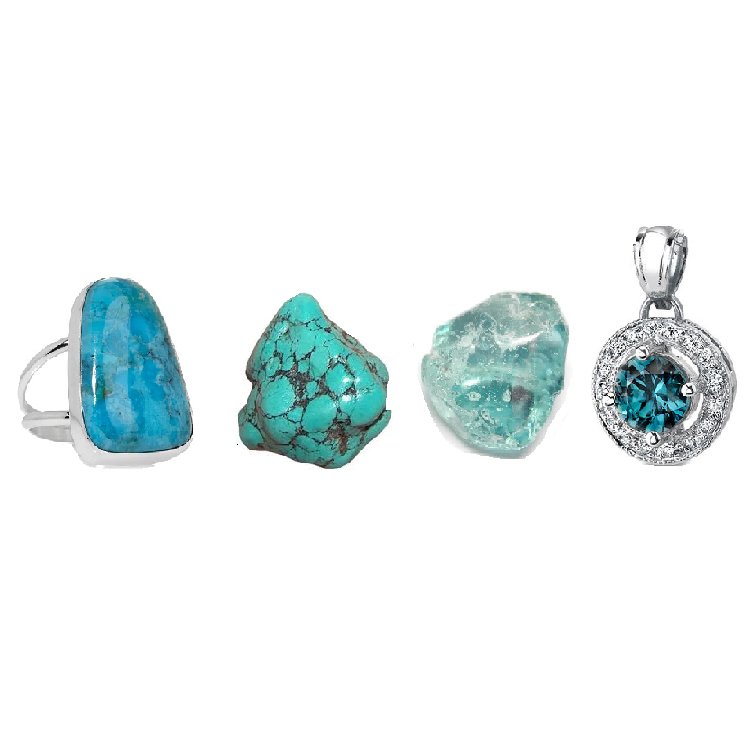
December’s birthstones offer three ways to fight the winter blues: tanzanite, zircon and turquoise – all of them best known for beautiful shades of blue. These gems range from the oldest on earth (zircon), to one of the first mined and used in jewelry (turquoise), to one of the most recently discovered (tanzanite).
Very rare cat’s eye variety of tanzanite
Tanzanite is an exquisite blue variety of the mineral zoisite. Named for its limited geographic origin in Tanzania, tanzanite is a relatively recent discovery. Zoisite is more than a century and a half old, but this rare blue variety was first found in 1967. The color ranges from pale blue to intense ultramarine with violet undertones. Tanzanite can display different colors when viewed from different angles. Stones must be cut properly to highlight attractive blue and violet hues, and minimize brown tones.
Few people realize that zircon is a spectacular natural gem available in a variety of colors. The name zircon likely comes from the Persian word zargun, meaning “gold-colored.” Others trace it to the Arabic zarkun, meaning “vermillion.” Given its wide range of colors – spanning red, orange, yellow, green, blue and brown – both origins make sense.
Zircon commonly occurs brownish red, which can be popular for its earth tones. Most gem-quality stones are heat treated until colorless, gold or blue (the most popular color). Colorless zircon, known as Matura Diamond, displays brilliance and flashes of multicolored “fire” that can rival fine diamond. There’s one key difference though: Zircon is more brittle.
Blue zircon, in particular, is the alternative birthstone for December. Since the Middle Ages, people have believed that zircon can induce sleep, ward off evil and promote prosperity.
Turquoise Jewelry: Old and new turquoise and silver Navajo bracelets. Image by Silverborders.
Turquoise is known for its distinct color, which ranges from powdery blue to greenish robin’s egg blue. Ancient Persia (now Iran) was the traditional source for sky blue turquoise. This color is often called “Persian blue” today, regardless of its origin. The U.S. is now the world’s largest turquoise supplier. The stone’s popularity here makes it a staple in Native American jewelry.
From ancient Egyptians to Persians, Aztecs and Native Americans, kings and warriors alike admired turquoise for thousands of years. It adorned everything from jewelry to ceremonial masks to weapons and bridles – granting power and protection, particularly against falls.
All of these stones are relatively inexpensive, but their beauty rivals precious gems. Colorless zircon is a convincing replacement for diamond, tanzanite often substitutes sapphire, and turquoise is unmatched in its hue of robin’s egg blue.
Whatever your style preference or budget, one of December’s three birthstones will match your true blue desires, or make the perfect gift for her December birthday or the Holidays! Contact Susan today to beat the December Blues at (212) 398-1256 or [email protected].
With sparkling lights & a festive atmosphere, it’s no wonder that December is one of the most popular times of year to get engaged. If you are planning a holiday proposal, you might want to consider on of the following iconic NYC locations – they are among the most favored backdrops for popping the question.
Central Park Carriage Ride
At the Top of the Rock
Offering an unparalleled panoramic view of Manhattan, Rockefeller Center’s famed three-level observation deck has been the site of countless proposals. The Top of the Rock is open 8 a.m. to midnight seven days a week, so you can plan a romantic evening proposal or a sunny daytime surprise.
Rockefeller Center Tree
The Rockefeller Center Christmas Tree
The Christmas Tree at Rockefeller Center is known worldwide. The Holiday Decorations provide a stunning backdrop for an unforgettable proposal. For those who are brave (& coordinated) enough to propose on the ice, there are other rinks as well – Central Park & Bryant Park also have ice rinks.
A Carriage Ride Through Central Park
Central Park is one of the most beautiful places in NYC. Plan a romantic carriage ride & get cozy under the blanket. Ask your driver to stop at your planned proposal site – there are plenty of landmarks within the park that would be ideal – including the famous Central Park boathouse, the reservoir, the carousel, the zoo, and the amphitheater; as well as Belvedere Castle, Bow Bridge and the Bethesda Fountain.
Holidays at Lincoln Center
Lincoln Center
You can’t beat the attractive fountain and the romantic twinkle of Lincoln Center’s lights at night. With the holiday tree and lights, it’s a romantic backdrop that you’ll always remember.
The Empire State Building
The 103-story skyscraper has observation decks on the 86th and 102nd floors, and both offer stunning views as a backdrop for your proposal. The Empire State Building is also open 365 days a year, so you can plan your proposal whenever you wish, even on a holiday.
While the spots above stand out as some of the most popular destinations for a proposal, the truth is that you can find holiday magic on almost every corner at this time of year. The Public Library, Radio City Music Hall, The Botanical Gardens, The Holiday Windows at Saks Fifth Avenue or SantaLand at Macy’s – the list is endless.
Of course, whether you ultimately decide to propose in front of thousands at Rockefeller Center, or in front of a roaring fireplace in your own home, we wish you a lifetime of happiness. Need help finding the ring to accompany your proposal? Browse our Engagement Collection for ideas, and contact Susan today to get started. We’ll help you create the perfect ring to start your happily ever after.
Radio City Music Hall OrnamentsNew York Public LibraryCentral Park Christmas Lights
Announcing special pricing on Diamond Essentials for the Holidays! A new special sale item will be featured each week. This week – Diamond Studs!
Diamond Essentials are classic pieces of jewelry that complement every jewelry collection. Diamond Studs, Diamond Hoops, Tennis Bracelets, Diamond Necklaces & Pendants – pieces that go from everyday to evening on the town seamlessly.
Make the Holidays Sparkle with Diamond Essentials!
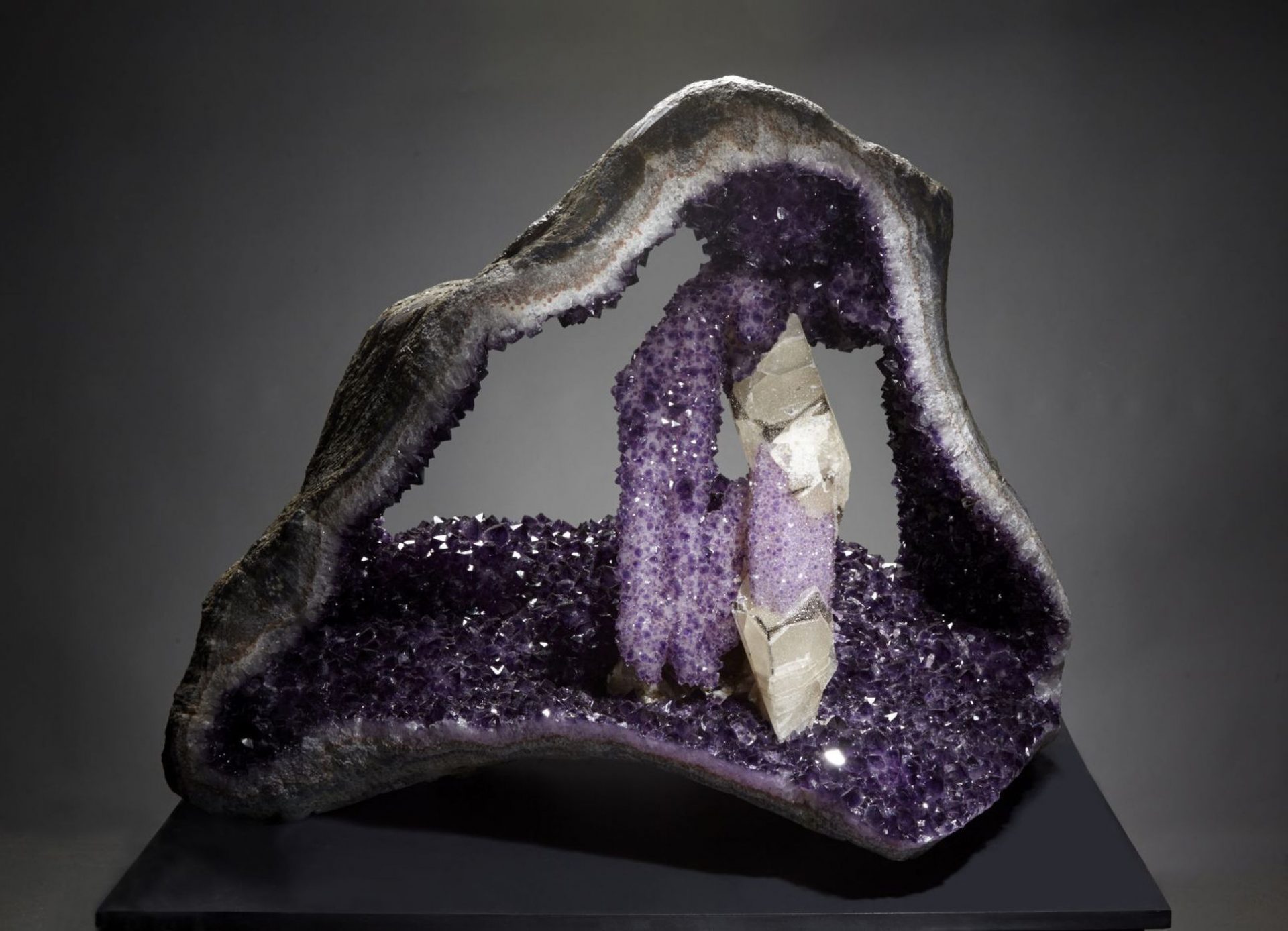
The gems that I use to create stunning jewelry can be equally stunning in their natural state. The Yale Peabody Museum of Natural History, one of the world’s preeminent natural history museums, has just opened David Friend Hall, a state-of-the-art gem and mineral gallery that will showcase those natural pieces. The beauty offered in the new display appeals equally to experts on gems, rocks and minerals, and nature and arts lovers looking for unique natural sights.
Beesley Quartz Agate
The gallery integrates free-standing, large-scale minerals with small-scale specimens. It will utilize customized cases to showcase the uniqueness of each specimen. The hall’s custom lighting will further enhance the experience by highlighting each specimen’s natural — but often otherworldly — features.
Lavinsky Tanzanite
This display features new approaches to learning that reduce the need for signage and wall text, and engage a broad audience through the latest technology. Visitors learn about the gem and mineral specimens through cloud-based, open source software accessible via smart phone or tablet. As new information about the specimens becomes available, the learning tools can easily be updated to reflect these changes.
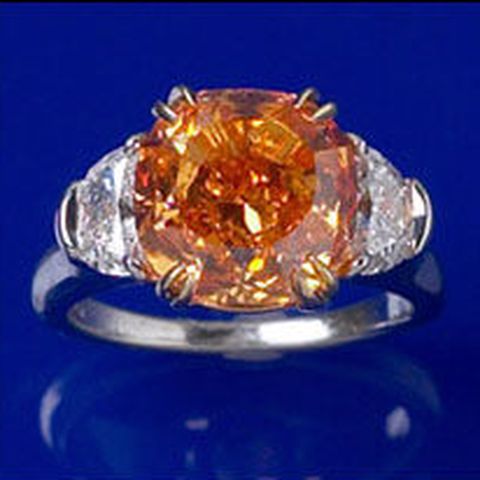
An 11.00 carat Brownish Orange piece of rough diamond was discovered by a farmer in the Central African Republic years ago, but he couldn’t have foreseen that it would one day become one of the rarest and most expensive Natural Fancy Vivid Orange diamonds in the world.
The piece of rough diamond ended up being cut and polished by William Goldberg of the William Goldberg Diamond Corporation. A stunning 5.54 carat Vivid Orange Cushion Cut diamond emerged, was graded at GIA and then sent to auction at Sotheby’s. On October 30th 1997, Ronald Winston of Winston Jewelers won the auction with a bid of $1.3 million and named the gem “The Pumpkin Diamond”, as it was the day before Halloween.
The Pumpkin Diamond
Winston had the diamond set into a ring with two crescent-shaped white diamonds flanked on either side of “Pumpkin”. The ring was valued at more than $3 Million. The exceptional ring was worn by Halle Berry in 2002, and it received international attention after her hand was photographed alongside her Academy Award. One year later, the diamond was taken out of its setting and was featured in the Smithsonian’s “Splendor of Diamonds” exhibit.
Halle Berry wearing the pumpkin diamond on her pinky finger.
Orange diamonds are one of the rarest Natural Fancy Color Diamonds. The Pumpkin Diamond is particularly rare, in that is pure orange without any modifying colors. Today this diamond would easily be worth ten times the price paid 1997 – possibly more!
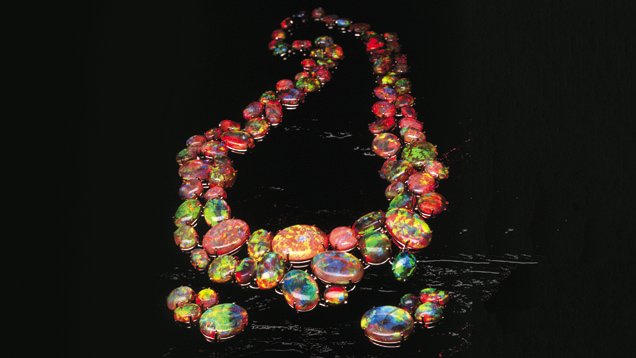
Australian mines were the origin of the most famous opals in history.
Aurora Australis
The Olympic Australis
At 11 inches long, 4 ¾ inches tall and 4 ½ inches wide, the Olympic Australis is the largest gem opal in the world. It weighs 17,000 carats (3.45 kg). The Olympic Australis was found in 1956 at a mine in South Australia’s Coober Pedy. That year the Olympic games were being held in Australia, so the miner decided to name the gem after the Olympic games.
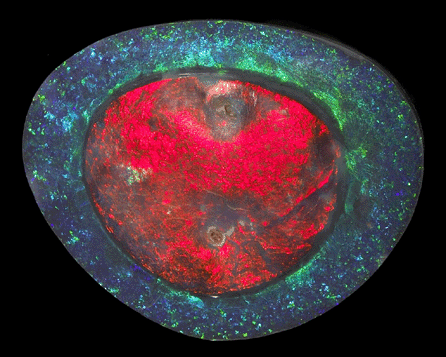
The Aurora Australis
The Aurora Australia is the most valuable black opal in the world. The gem was found in Lightening Ridge, in NSW. Altmann & Cherny brought it in a semi rough state and they later cut and polished it into a harlequin pattern. The opal has a black background, interspersed with green, blue and red colours. The gem was named Aurora Australis after the southern lights. The value of the gem is estimated at AUD1,000,000.
The Queen’s Opal
The Queen’s Opal
The Queen’s Opal, also known as the Andamooka Opal, was chosen by the government to present to Queen Elizabeth II when the queen was slated to visit Australia for the first time. It shone with blue, green and red colors, and was later set into a palladium necklace.
The Pride of Australia
The Pride of Australia, or Red Emperor, was discovered in 1915 at a mine known as Phone Line. It is called the Pride of Australia because its shape resembles that of the continent. The opal has blue and black veins, interspersed with red streaks. Unfortunately, the Pride of Australia was stolen from a display at the Forest Lawn Memorial Museum in 1961. It has never been recovered.
Halley’s Comet Opal
The Halley’s Comet Opal
The Halley’s Comet Opal was so named because it was mined in 1886, a year that the Halley’s Comet was seen. This uncut black opal, the largest one found to date, was unearthed at Lightening Ridge, NSW.
There have also been many famous people who were enamored with opals.
Andy Warhol, one of the most recognized artists of the modern world, fell hard and fast into his love affair with this magnificent gemstone. He became an avid collector, and in 1977 Warhol featured photos of the
Andy Warhol
gemstone taken through a microscope at his exhibition Opal the Rainbow Gem at the ICA in London.
A Senator of the Roman Republic, Nonius, owned a fabulous Opal. The opal was set in a ring, and is said to have been the size and shape of a hazelnut. Roman General Mark Antony was so entranced by the moving lights within Nonius’ opal, his fascination led him to covet the stone which he sought as a gift for his lover Cleopatra. Antony offered Nonius several times the 2,000,000 Sesterces at which the Opal ring had been appraised, however Nonius refused to sell it, declaring it was his life. Nonius preferred to be banished from Rome losing all he owned, then to part with the opal.
Elvis Opal Ring
A massive 14k vintage opal ring featuring a huge crystal opal surrounded by diamonds, was purchased by Elvis Presley in the early 1970’s. It was worn both on and off stage.
John Davison Rockefeller, America’s first billionaire and the world’s richest man, was taken by the alluring charms of Opals. He paid a record price for the mesmerizing ‘Fire Queen’ Opal.
Sarah Bernhardt was on of the most famous actresses of her time. She commissioned this ruby-eyed snake bracelet and ring (hathphul), inlaid with Opals, for her premiere as Cleopatra.
Opal is the national gemstone of Australia and the birthstone for the month of October. The most striking feature of opal is the ability to refract and reflect specific wavelengths of colors. In fact, the term “opalescence” was coined to describe this phenomenon. The size and spacing of spheres of silica within the stone refract specific wavelengths of light; each sphere refracting a single, pure spectral color much like the droplets of water in a rainbow. The interplay of these pure wavelengths of light gives opal a unique visual.
Black Opal
Most opal is more than 65 million to 145 million years old. It is found in the Cretaceous layer of rock, formed when dinosaurs roamed the earth. Opal tends to be found near the earth’s surface in areas where ancient geothermal hot springs once flowed. The minerals bubbled up from beneath the surface of the earth and slowly over centuries lined the walls of cavities in the bedrock.
Opal is derived from the Latin word Upala that relates to precious stones and was considered the “cupid paederos” or child as beautiful as love. For Roman scholars, the opal represented hope and purity, a concept later adopted by modern Asian countries who consider the opal as a symbol of hope. The opal that the Romans referred was crystal formed volcanic gemstones in the Carpathian Mountains. It featured flashes color that was not seen anywhere else in the ancient world and really impressed the Romans. Ancient Greeks believed opal had the power to have sixth sense in foresight and also prosperity.
Ethiopian Welo Opal
The Roman historian Pliny described opal as the queen of gems: “There is in them a softer fire than the ruby, there is the brilliant purple of the amethyst, and the sea green of the emerald – all shining together in incredible union. Some by their splendor rival the colors of the painters, others the flame of burning sulphur or of fire quickened by oil.”
Native Australian aborigines’ considered opal to have spiritual properties and have many myths and legends about Opal. They believed opal holds signs of their past ancestors and a spirit named Muda, who changes from man to pelican so pelican birds are considered spiritual also. Asian countries had experienced opals from Indonesia and appreciate the color spectrum of opals. The opal has been considered as a gemstone of hope and security in Asian countries. Japanese buy opals as show of wealth and standing in the community, and prefer perfectly formed gem quality even if the opal is small.
Light Opal
A large percentage of the world’s opal comes from three distinctive regions in Australia, Lightning Ridge (the home of black opal) the South Australian fields of Coober Pedy, Mintabie, Lambina and Andamooka (the main sources of light base opal) and the Queensland fields, where boulder opal originates. The major opal producing field for black opal is Lightning Ridge in New South Wales, Australia. Opal from Lightning Ridge is often considered to be the best and brightest in the world. The most sought after black opal is red or multicolor on black, which is very difficult to find. Such stones are always cut on the fields and sold immediately.
Check out these magnificient opal earrings available in our Fine Jewelry collection.
Intense Boulder Opal And Diamond Drop Earrings
Next week we’ll share on some of the more famous opals through history.
Last week, as we tried on rings, necklaces and more during the Sapphire & Diamond Extravaganza, I was reminded that truly, this is such an enjoyable profession. There are many aspects that I enjoy. In this case, I’m referring to the fact that I haven’t met many women who don’t enjoy the opportunity to see what “that ring” might look like, or how it feels to be adorned in their favorite gemstone. Some of the incredible Sapphire Rings we tried on can be seen in the new Sappheiros Six collection just added to the site – imagine the Sparkling Sappheiros ring with the Shooting Stars Diamond Bracelet – are you feeling ready for a night on the town yet? But I digress.
Sparkling SappheirosShooting Stars
Watching new friends & customers enjoy the jewelry reminded me of a video clip I saw in JCK Magazine recently. Earlier this summer, Harper’s brought a group of young girls, aged 3 to 8, to the famous Van Cleef & Arpels and filmed their reactions as they tried on high-end diamond jewelry. As you might expect, they were enthralled. One of the girls summed it perfectly – “diamonds go with lots of things!” You’ve heard that famous quote, “Diamonds are girl’s best friend”? Apparently little girls are no exception to the rule!
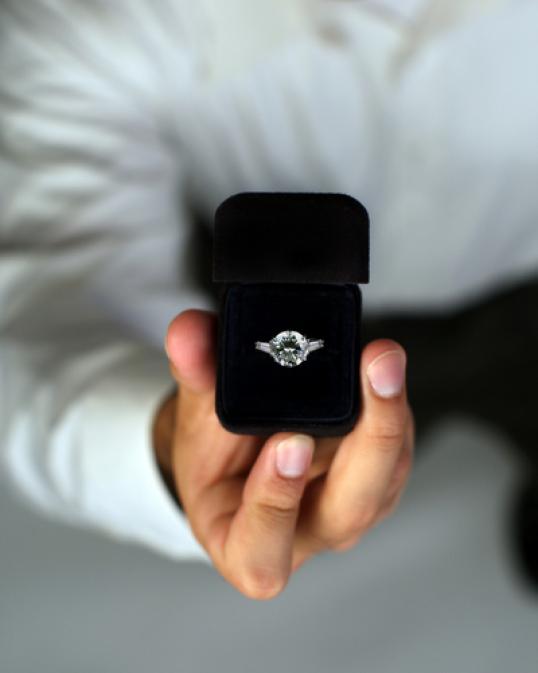
We love a good proposal story. Luckily, our engagement ring customers frequently share those stories with us. A message in a fortune cookie, a surprise trip to Paris – Every story is another celebration of love.
If you follow the local news, today you heard about a public proposal that almost went horribly wrong. From NYMag.com:
The ultrapublic stadium proposal is an extraordinary leap of faith: If you’re rejected by your significant other, your pain and humiliation will be broadcast in real time to thousands of other people. But even if the worst possible scenario doesn’t come true, it can still go horribly wrong.
Take Andrew Fox, a Pennsylvania man who planned to propose to girlfriend Heather Terwilliger at Yankee Stadium on Tuesday night. The camera focused on them, and disaster struck.
“I opened the ring box and got on my knee, and as soon as I opened it, it just fell, and we couldn’t find it for the longest time,” Fox told ABC News. It took a mass search that lasted a full five minutes to find the ring, bits of which can be seen on video here. (It ended up being caught at the bottom of Terwilliger’s pant leg.)
She said yes, because any more embarrassment would just be overkill.
Congratulations Heather & Andrew! We wish you a lifetime of happiness.
Want to see more like this? Like us on Facebook, Follow us on Twitter & Subscribe to the Grants Jewelry Mailing list so we can stay in touch!
Last week I attended a GIA Alumni Lecture, The Tale of the Blue Moon Diamond. The lecture was presented by Alan Bronstein, a Colored Diamond Expert. Alan sets uncompromising standards for qualifying and sourcing the most rare and beautiful diamonds for discerning collectors and connoisseurs worldwide. With all the attention to Fancy Colored Diamonds earlier this year, I was excited to learn more about the Blue Moon Diamond.
Alan Bronstein
The Blue Moon Diamond is among the largest known Fancy Vivid blue diamonds ever found. Alan shared with us its history, from the moment the extraordinary rough diamond was discovered 3 years ago, and described the journey from rough diamond into one of the most magnificent and legendary diamonds of modern times.
Why is it called the Blue Moon Diamond?
The rough 29.6-carat Blue Moon Diamond
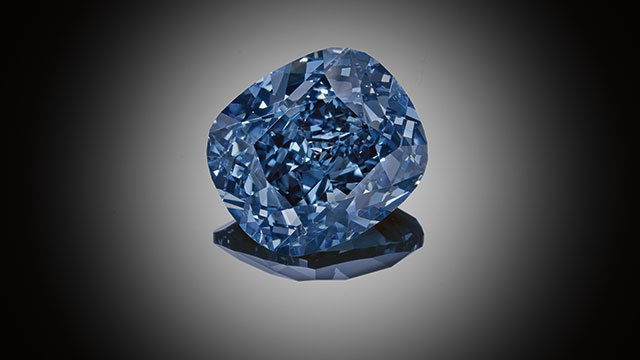
Although it is a Blue Diamond, the name is actually a tribute to its rarity – a reference to the expression ‘once in a blue moon.’ Aside from its sheer size, and remarkable clarity (less than 2% of stones are Flawless or Internally Flawless), another extremely rare and fascinating feature of this diamond is the highly unusual red phosphorescence, which can be observed when the stone is exposed to ultraviolet light. It is so exceptional that scientists from the Smithsonian Institution and the National Gem and Mineral Collection carried out extensive research on the diamond ahead of its exhibition & sale.
How Does a Blue Diamond Form?
Diamonds with a strong saturated color represent only a tiny percentage of all natural diamonds – and only a minute percentage of all natural color diamonds are blue. The blue arises from trace amounts of the element boron in the crystal structure. Less than one boron atom per million carbon atoms is sufficient to produce the blue coloration.
A Few Highlights About the Blue Moon
The Blue Moon Diamond drew widespread media attention when the discovery of the 29.62 ct rough at the Cullinan mine in South Africa was announced in January 2014. The Cullinan Mine is known for Fancy Blue Diamonds, including the Cullinan Dream and Oppenheimer Blue, two stones that received quite a bit of attention earlier this year.
In June 2014, after a few months of examination, the diamond was cut into a 12.03 ct cushion, graded by GIA as Fancy Vivid Blue and Internally Flawless.
The Blue Moon made its first public appearance at the Natural History Museum of Los Angeles County on September 13, 2014 in a temporary exhibit.
The stone was purchased at auction by a billionaire tycoon as a gift for his daughter, at a record setting price of $48.5 million – more than $4 million per carat! That record was eclipsed when the Oppenheimer Blue sold in Geneva for $57 million earlier this year.
The World Record Oppenheimer Blue
The Blue Moon Diamond is deep blue, intense and incredibly beautiful.
Starting to See The Finished ShapeThe Blue Moon Diamond
We’ve been busy this August, enhancing grantsjewelry.com and planning for fall events! As the summer winds down, here’s a quick preview of what we have planned for September.
All About Sapphires
Sapphire, the September birthstone, has been popular since the Middle Ages and, according to folklore, will protect your loved ones from envy and harm. This birthstone of September is a highly valuable gemstone, and has accordingly remained among the 4 precious stones of the modern day. While the gemstone is available in a variety of colors, the color of sapphire popularly regarded as the September gemstone is the blue sapphire. This September stone is believed to bring inner peace and stave off depression.
A Two-Day Event
We had so much fun at the Ruby Event that we’ve decided to open the showroom for TWO days in September. Stay tuned for details!
Highlights on Diamond Essentials
Your everyday versatile favorites take you from errands on the go to an evening out on the town! Every custom creation from Grants Jewelry is one-of-a-kind – made according to your specifications and budget. We can create expertly matched diamond studs, tennis bracelets, diamond hoops, and a variety of necklaces – if you can imagine it, we can create. Affordable elegance, right here in NYC.
Congratulations on your engagement! As a newly-engaged bride-to-be, we’re sure that practical and time-consuming tasks like purchasing engagement ring insurance are far less exciting than searching for the perfect wedding dress or planning a dreamy honeymoon. However, if your engagement ring falls off into the ocean while you are working on your summer tan you’ll wish you had protected that sentimental stone. It’s important to make sure you’ll be able to enjoy your ring for years to come—no matter what you’ll be doing with that left hand!
Insure Your Ring
Below, a quick overview on insuring your ring:
First, choose a provider.
You have two options for insurers. If you already have homeowners’ or renters’ insurance, you might be able purchase an extension to cover your engagement ring specifically. If you don’t have homeowners’ or renters’ insurance, there are companies that specialize in jewelry insurance. The cost of coverage will vary based on several factors including the value of your ring and where you live.
Some important questions to ask about your policy include:
Can you choose who repairs your ring?
If you’re insured for replacement, are you limited in where can you purchase a new ring?
Are there any circumstances that aren’t covered?
Next, get an appraisal.
Appraisal with Every Piece
You can’t protect the value of your ring if you don’t know what it’s worth. A thorough appraisal will include the carat weight, cut, color, and clarity of all the diamonds, the carat weight and shape of any colored stones, the metal type and fineness or karat, as well as any identifying marks, hallmarks, or stamps.
If your center stone is around half a carat or larger, your jeweler will often provide a diamond certificate or grading report from an independent gemological laboratory like the Gemological Institute of America. This assessment of quality—while not an appraisal—lists all of the measurements your appraiser will need to make the most accurate determination of value. (This detailed information can also help track down your specific diamond if it’s ever stolen.)
Finally, remember to reappraise.
It’s important to have your ring reappraised every 2 to 3 years for insurance purposes. And consider going back to the same appraiser each time for consistency.
It’s one of the many reasons to choose Grants Jewelry for your Engagement Ring and other important jewelry needs.
Every Engagement Ring from Grants Jewelry is one of a kind, and comes with a thorough appraisal. Susan is a GIA graduate, so you can be confident that you’ll have all you need to insure this valuable purchase. Contact us today to discuss engagement rings, or jewelry appraisal needs.
Join our mailing list to receive updates on other informative and interesting articles about diamonds, gemstones, jewelry and more.
Established in 1931, The GIA (Gemological Institute of America) is considered the world’s foremost authority in gemology. They are present in 13 countries, with 10 campuses, 4 research centers, and 9 grading laboratories. The GIA is a nonprofit institution dedicated to continuous education and research in the field of gems and jewelry. Their mission is to ensure public trust in gem and jewelry by upholding the highest standards of integrity, academics, science, and professionalism.
The GIA created the global standards to accurately determine the quality of diamonds (4C’s – Color, Clarity, Cut, and Carat Weight), colored stones and pearls (7 Pearl Value Factors – Size, Shape, Color, Nacre, Luster, Surface, and Matching). The organization has supported the journey of the global gems and jewelry industry through breakthrough research, unbiased analysis, and by providing the most respected professional credentials.
GIA Certificate
What Is a GIA Diamond Certificate?
The GIA does not grade complete pieces of jewelry; it only issues reports for gemstones. A diamond certificate issued by the GIA includes a description of the stone’s major quality characteristics, i.e., the 4 Cs: color, clarity, cut, and carat weight. GIA diamond reports also include additional information about the evaluated stone such as how smooth its surface is and how symmetrically the diamond is shaped. There is also a diagram showing the measurements of the stone’s most important proportions. These are the features that affect a diamond’s value the most. Each of them will receive a certain grade on a scale devised by the GIA. This grading scale is one of the most widely used standards to describe diamond quality.
Why Choose a GIA Certified Jeweler?
Susan at Work
GIA Diamond Graduates train with over 140 actual diamonds. After their training certified jewelers understand how diamonds are formed, mined, manufactured, and marketed. They learn how to estimate the weight of mounted diamonds, and how to grade diamonds as per the GIA’s grading standards for Color, Clarity, Cut and Carat Weight. GIA Certified Jewelers can identify diamond treatments for color and clarity, and also identify the common diamond look-alikes (simulants) and synthetic diamonds (both man-made & lab-grown).
A GIA-certified jeweler has the training you can trust for the best product knowledge and guidance in your purchase. You get the value of their knowledge and experience firsthand. When you choose Grants Jewelry, you can shop with confidence, knowing that Susan is a proud GIA graduate, and every piece of jewelry she creates is accompanied by a complete appraisal. Contact us today.
Appraisal with Every Piece
Stay in the know! Subscribe now to receive articles like this in your inbox. Once a week we send the News & Events digest with everything from the previous week.
Red is the color of love. It radiates warmth and a strong sense of vitality, and is associated with passion and power. Red is also the color of the ruby, the king of the gemstones, and July’s birthstone. For thousands of years, the ruby has been considered one of the most valuable gemstones on Earth. It has everything a precious stone should have: magnificent color, excellent hardness and outstanding brilliance.
For a long time, India was regarded as the ruby’s classical country of origin. In the major works of Indian literature, a rich store of knowledge about gemstones has been handed down over a period of more than two thousand years. The Sanskrit word for ruby is ‘ratnaraj’, which means something like ‘king of the gemstones’. In fact, when a particularly beautiful ruby crystal was found, the ruler sent high dignitaries out to meet the precious gemstone and welcome it in appropriate style. Today, rubies still decorate the insignia of many royal households.
Timur Ruby
Ruby is the red variety of the mineral corundum, one of the hardest minerals on Earth (sapphire is also a variety of corundum). The term ‘corundum’, is derived from the Sanskrit word ‘kuruvinda’. Pure corundum is colorless. Slight traces of elements such as chrome, iron, titanium or vanadium are responsible for the color. These gemstones have excellent hardness, second only to that of the diamond. Only red corundum called ruby, all other colors are classified as sapphires. The close relationship between the ruby and the sapphire has only been known since the beginning of the 19th century. Up to that time, red garnets or spinels were also thought to be rubies. That is why the ‘Black Ruby’ and the ‘Timur Ruby’, two of the British Crown Jewels, were so named. Actually those Jewels are not rubies at all – they are in fact spinels.
Ruby consists of aluminium oxide and chrome as well as very fine traces of other elements depending on which deposit it was from. In really fine colors and good clarity, this gemstone occurs very rarely in the world’s mines. It is actually the coloring element chrome which is responsible for this scarcity. Millions of years ago, when the gemstones were being created deep inside the core of the Earth, chrome was the element which gave the ruby its wonderful color. At the same time chrome caused a multitude of fissures and cracks inside the crystals. Very few ruby crystals were able to grow to considerable size and crystallize to form perfect gemstones. Rubies of more than 3 carats in size are very rare. Rubies with hardly any inclusions are so valuable that in good colors and larger sizes they surpass auction prices for diamonds in the same category.
The red of the ruby is incomparable: warm and fiery. Two magical elements are associated with the symbolism of this color: fire and blood, implying warmth and life for mankind. So ruby-red is not just any old color; it is absolutely undiluted, hot, passionate, powerful color. The ruby is the perfect way to express powerful feelings. Jewelry set with a precious ruby bears can signify the passionate, unbridled love that people can feel for each other.
Ruby, Ruby, Ruby
In this gorgeous ring “Ruby, Ruby, Ruby”, the rubies are natural macles arranged in a flower shape. Prefer another setting? Perhaps you are looking for a necklace, or wish to create your own ruby ring. Contact us today to explore creating your custom ruby, diamond or other precious stone jewelry – Grants Jewelry can help design and create a piece for any style and every budget.
Ruby Information & Photos from Gemstone.org and AboutRubyJewelry.com
Did you know that if you are a June baby, you have three birthstones from which to choose? Pearl, moonstone and alexandrite. But since pearls are the first gems ever known to man, we have chosen to focus on pearls alone in celebration of all those June birthdays out there.
Pearls are associated with the Moon and are symbolic of its enchanting powers. In many cultures, they also have a connection to love and marriage, so it’s no surprise that June is also the month in which brides accessorize themselves with pearls on their wedding day.
Before the creation of cultured pearls in the early 20th century, natural pearls were the most valuable of all gems. At the beginning of the month, we posted the story of Cleopatra & Marc Anthony. In Asian beliefs and Greek mythology, pearls revealed various lores and legends. There was a superstition that regarded pearls as unlucky if worn by a person of impure emotions such as malice or jealousy. But if given in love or worn with a pure heart, the pearl was regarded as a symbol of purity, fertility, modesty, love, and the cycle of life.
One of the most legendary pearls, La Peregrina, had many owners and traveled through lands and time periods. It was reported that a 16th century slave won his freedom by bringing the pearl to the Spanish court. Owned by Queens Margarita and Isabella of Spain, and Mary Tudor of England, in the 1800s it became part of the Bonaparte family.
This double-strand La Peregrina pearl necklace was custom designed for Elizabeth Taylor by Cartier and features the world’s most expensive pearl.
This pear-shaped saltwater pearl, with a name that aptly means “the wanderer”, was auctioned in 1969 where it was snapped up by Richard Burton as a gift for Elizabeth Taylor. She had Cartier design a necklace of pearls and rubies around it, based on a portrait of Mary Tudor. And speaking of Cartier, in 1916, Jacques Cartier traded two pearl necklaces for the property that was to become his landmark Fifth Avenue store.
Up until the 19th century, saltwater pearls were predominately worn only by the nobility and the very wealthy, set into crowns and sewn on clothes. But this began to change when freshwater pearls were discovered in the US and seed pearls were imported to Victorian England from India and China. These were found in almost every type of jewelry of the day and in every conceivable motif. When Prince Albert died, seed pearls began to represent tears when set into mourning jewelry against jet or black enamel.
In the Edwardian/Belle Époque era, pearl jewelry continued to be popular, but now the pearls were set alongside mine or European-cut diamonds in platinum for the all-white look that was the fashion in jewelry at the time.
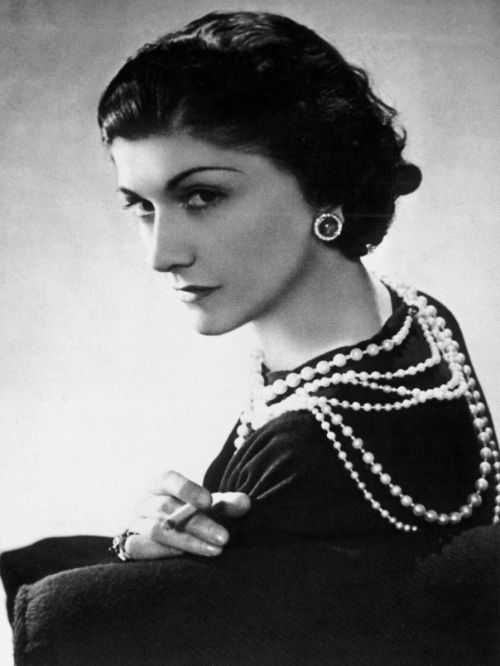
“I think that pearls are understated” said Coco Chanel.
By the beginning of the 20th century, Kokichi Mikimoto, the son of a restaurateur, was being credited with creating the cultured pearl industry, which allowed a wider audience of women to wear perfectly matched strands of pearls. When we think of the 1920s and women’s changing fashion, an image of Coco Chanel wearing strand upon strand of real and faux pearls immediately springs to mind. “I think that pearls are understated and slightly reticent and for that reason they really are very effective,” she once said, eschewing the ostentatious jewelry of the day. Later, in the 1950s, Grace Kelly became a poster girl for pearls. “I favor pearls on screen and in my private life,” she is quoted as saying. In the film Rear Window (1954), her jewelry consists mainly of pearls, while in the official engagement photo of Kelly and Prince Rainier III, she wears a two-strand pearl choker.
In More About Pearls, we mentioned style icons Audrey Hepburn and Jacqueline Kennedy. They ensured that pearls remained in fashion throughout the 1960s. And in 1981, royalty reigned over pearls once again in England when Lady Diana married Prince Charles. As a wedding gift, the Queen gave Diana a tiara called the Cambridge Lover’s Knot. Diana was also responsible for bringing back the pearl choker and was often photographed wearing pearl necklaces.
Pearls at Grants Jewelry
From the 1960s to the millennium, pearls came to represent prep school girls and the country club set, and were pretty much out of fashion with the exception of on one’s wedding day. But in the early 21st century, creative thinking designers working with South Sea, Keshi and baroque pearls, have put this queen of gems firmly back in the jewelry spotlight, where it belongs.
The Pearl Event took place yesterday at the Grants Jewelry Showroom. We had pearl jewelry on display, answered pearl questions, demonstrated stringing and more. The Ruby is July’s birthstone, and next month we’ll feature several posts about the blood red stone, as well as host a Ruby Event at the showroom!
Looking for pearls? Contact us today. We’ll help you create the perfect pearl jewelry pieces, whether for everyday or your Wedding Day. Create signature strands like those worn by Coco Chanel, or vibrant colored pearls such as those shown here. We look forward to hearing from you!
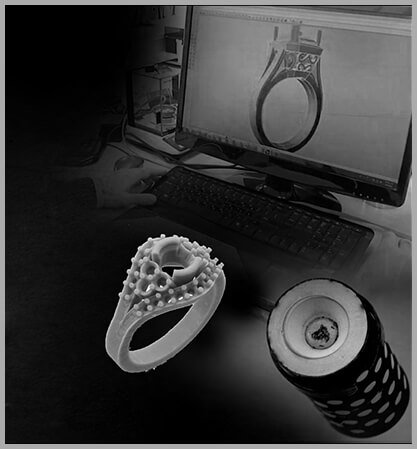
Whether you’ve had an idea in your head for years or you’ve found an existing design and want to add your own personal twist, our custom jewelry design process will ensure pieces that you will never want to take off. People might create custom jewelry for weddings and engagements, one of a kind gifts, or family heirlooms. At Grants Jewelry, every piece we create is one-of-a-kind. Take a look at how the Grants Jewelry Custom Design Process works.
Concept & Design Sketches
Concept and design
Every piece starts off with a concept: your concept. We will meet and capture your vision on paper. We can work with a series of sketches or photos of existing pieces to create your dream design.
Rendering
An experienced designer will create a 3-D image in a CAD program to calculate the exact dimensions of your piece.
Mold making
A rubber mold prototype is created where wax is poured to get an imprint of the design. We then heat the mold and melt the wax, leaving a cavity with which we create a ceramic casting.
Mold Making
Metal cast and setting
Liquefied metal is then poured into the ceramic casting which is cooled and then shattered to reveal your final piece. Then comes the most challenging task: the setting and securing of your carefully selected stones to allow for maximum sparkle. Our expert jewelers have mastered the art of a perfect setting.
Polishing
After your stones are perfectly set, your piece it is ready for its final steam polish and rhodium.
Engraving
The Grant’s Jewelry logo is engraved on every piece along with a personal message if requested. Every custom design piece receives an appraisal accurately describing the piece in detail, including value, for identification and insurance purposes.
Why are pearls considered the world’s most mysterious of gems? Because of their origin and the manner in which they are formed.
Pearls come from shell fish, the most common of which is the oyster. When a grain of sand enters and irritates the soft part of the oyster, a new substance is formed called nacre, a protective covering, the mother-of-pearl. Within approximately six months, a pearl emerges from the shell as a radiant gem requiring no processing.
Types of Pearls
South Sea pearls are generally much larger than other pearl types and have a unique luster quality – a soft reflection due to the large aragonite platelets that make up the pearl. They also have the thickest average nacre of all cultured pearls. These factors make South Seas both distinctive and valuable. South Sea pearls have the highest value and command the highest prices of all types of pearls.
As with other saltwater oysters, the South Sea pearl oyster is bead-nucleated. However, the growth period is approximately 2-4 years, unlike the akoya pearls, which develop in less than half that time. Being a delicate organism, this type of pearl oyster is particularly susceptible to disease and stress, which is one reason why the culturing area for South Seas pearls is quite limited. Attempts to expand South Sea pearl farming have met with little success because the oysters do not thrive outside their native, natural environment.
Akoya pearls are the specialty of Japanese pearl farms. The first pearls to be cultured early in the 1920s, their white color and rosé overtone complement a fair complexion. Because Akoya pearls are a high-quality pearl, you’ll find them set with gold posts and clasps, and you’ll find they are well matched for size, shape, and color. You’ll also find few blemishes and a deep, beautiful luster.
You may notice that the Akoya looks very similar to the Freshwater pearl. When compared side-by-side, the difference is clear. Akoya pearls are on average larger, smoother, rounder, and more lustrous than Freshwater pearls.
Tahitian Pearls
Tahitian cultured pearls offer a dramatic touch. The natural black color of these pearls comes from the color of the oyster’s black lips. These pearls are traditionally called “black,” but their color can range from a metallic silver, to the color of graphite. And within this range of colors they can have bluish, purplish, or greenish overtones.
Tahitian cultured pearls are cultivated from the black-lipped variety of the pinctada maxima oyster which reaches a foot or more in diameter, and produces very large pearls. This oyster is very sensitive to the pearl culturing process, which makes the pearls very costly to produce.
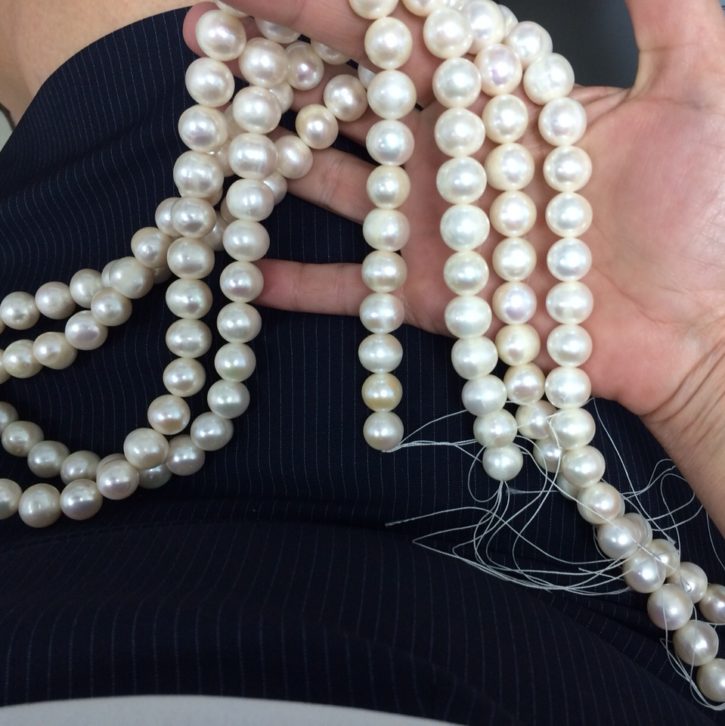
Most Freshwater pearls come from China, and are the product of an elaborate process in which a single resilient mussel can be harvested many times, yielding several pearls at a time. The Freshwater pearl looks remarkably similar to the Akoya. The only tradeoff is that Freshwater pearls are generally smaller, less symmetrical, and not as well matched when strung on a strand.
Freshwater cultured pearls can be created in a spectrum of colors. Many popular Colors – white, pink, orange, and other pastels – can be achieved through natural means, including the pearl mollusk’s genetics, what they eat, and the amount and type of trace metals in the cultivating environment.
Women with Pearls
Elizabeth I ruled as Queen of England for forty years until her death in 1603. Abstemious in many ways, she nevertheless fed her extravagant fondness for pearls—thousands of pearls. Her crowns were adorned mainly with pearls. Imbedded into her starched and lacy coronets, her 3,000 gowns and 80 wigs were pearls. Necklaces, earrings, pendants, and yes, shoes—adorned with pearls—pearls of great price.
Many other famous women delighted in wearing pearls: Czarina Alexandra of Russia, Princess Grace of Monaco, Jacqueline Kennedy Onassis, Princess Diana, Sophia Loren, and Elizabeth Taylor.
Grants Jewelry has a wide selection of pearls available to help you create the pearl necklace, bracelet or earrings of your dreams. Contact Us today!
Fancy colored diamonds are not the only jewelry you’ll find on the auction block these days. Joan Rivers’ private collection of accessories, jewelry and home decor is up for sale online from June 16 to 23 and via live auction on June 22 in NYC. Among the items up for grabs are diamond brooches, amethyst necklaces and silk doghouses.
A suite of amethyst and rhinestone jewelry, by iradj Moini, and other pieces that will be featured at auction.
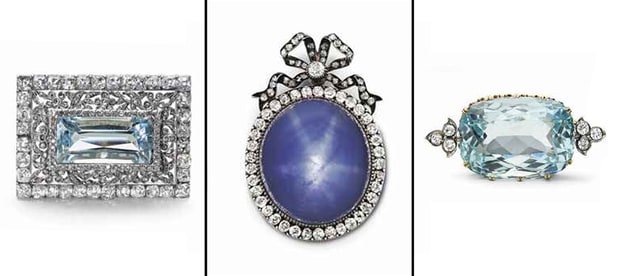
The beloved Fashion Police host, who died at the age of 81 in September 2014, had a large collection of gemstone brooches. The most expensive one in the estate? A silver-topped, gold-mounted star sapphire and diamond pendant brooch by Fabergé, which is expected to sell for anywhere between $70,000 and $90,000 during the live auction at Rockefeller Plaza. Other brooches, which Rivers loved to pin to her various embroidered blazers, include a gold and platinum-mounted aquamarine and diamond creation by Fabergé, fetching anywhere between $40,000 to $60,000 and another aquamarine and diamond design from 1908.
Her brooches aren’t the only impressive items that will be featured in the live auction. The comedienne, and mother to Melissa Rivers also owned a ruby, emerald and amethyst beaded necklace by Iradj Moini, which could sell for $15,000. Rivers’ love of colorful jewelry is evidenced by the variety of pieces, including this turquoise and pearl set silver bracelet by Fabergé (circa 1850), which could go for up to $12,000. Among her simpler items is a diamond and gold ‘Panthère’ wristwatch by Cartier, which may sell for as much as $10,000.
Silk doghouse with a hinged pagoda roof, and jeweled and gold-mounted nephrite study of a lily of the valley leaf are among the more unusual items that will be included.
Some of Rivers’ more out-there collectibles from the live auction are our favorites. The “Rare and Important Jeweled and Gold-Mounted Nephrite Study of a Lily of the Valley Leaf” by Fabergé is thought to sell for between $200,000 and $300,000 (it’s just 5 inches long), while a silk doghouse with a hinged pagoda roof could fetch up to $1,500 and a purple pill box less than 2 inches wide will start at $12,000.
Which is your favorite piece from Rivers’ collection?
Black diamonds, also known as black industrial diamonds, owe their color to minor inclusions and random particles in the stone, rather than the trace elements of nitrogen and hydrogen which give color to most diamonds. They have a unique sheen that seems to come from total darkness, as pure black diamonds completely absorb light, rather than reflecting it. They are usually dull, unlike clear or colored diamonds, which are transparent. As a result, the diamond cut is less important for a black diamond, because it does not reflect or refract light. They do however demonstrate a wonderful shine, which is almost unique to this color of diamond.
Black Star of Africa
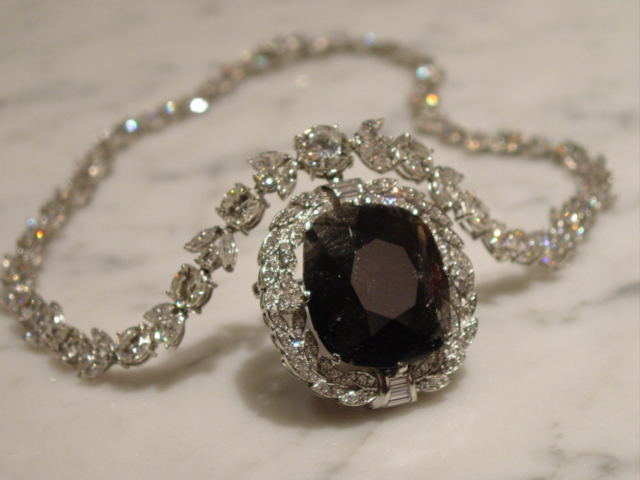
Two of the most famous black diamonds are the Black Star of Africa and the Black Orlov. The Black Orlov is also known as the Eye of Brahma Diamond. The diamond—originally 195 carats —is said to have been discovered in the early 19th century in India. It was supposedly featured as one of the eyes in a statue of the Hindu god Brahma in Pondicherry, until it was stolen by a monk.
According to legend, this theft caused the diamond to be cursed. In 1932, diamond dealer J. W. Paris is said to have taken the diamond to the United States and soon after committed suicide by jumping from a skyscraper in New York City. Later owners included two Russian princesses called Leonila Galitsine-Bariatinsky and Nadia Vygin-Orlov (after whom the diamond is named). Both women allegedly jumped to their deaths in the 1940s.
Princess Nadia and The Black Orlov
The diamond was later bought by Charles F. Winson and cut into three pieces in an attempt to break the curse; the 67.5-carat Black Orlov was set into a brooch of 108 diamonds, suspended from a necklace of 124 diamonds. The diamond was purchased by diamond dealer Dennis Petimezas in 2004; Petimezas said he was “pretty confident that the curse is broken”.
Natural black diamonds, for the most part, are not what gemologists consider gem quality, but they aren’t coal either. Instead, they are polycrystalline diamonds known as carbonado that are a combination of smaller diamonds, graphite and carbon crystals. Though this type of diamond is tougher than a colorless diamond due to its composition, the porous gems are also harder to cut and polish.
Carbonado
Most colorless diamonds are formed deep within the earth’s mantle, but there are inconclusive theories as to how exactly carbonado is formed. Some even think that a supernova in outer space traveled to the earth in the form of a large meteorite that hit the earth 2.3 billion years ago. This catastrophic event may have then split apart Brazil and part of Africa which are the only two places carbonado is found.
A very high quality natural black diamond is incredibly rare since most carbonado is made up of minuscule, porous crystals. Due to this rarity, a natural gem quality black diamond can be more expensive than a colorless diamond of similar quality.
Patricia
Grants Jewelry recently created “Patricia”, a custom engagement ring that features a natural fancy black diamond as the center stone, surrounded by natural round brilliant cut diamonds in a platinum setting.
The “Oppenheimer Blue” diamond sold recently for more than 56.8 million Swiss francs ($57.6 million) including fees, crushing the previous record for the most expensive diamond ever sold at auction.
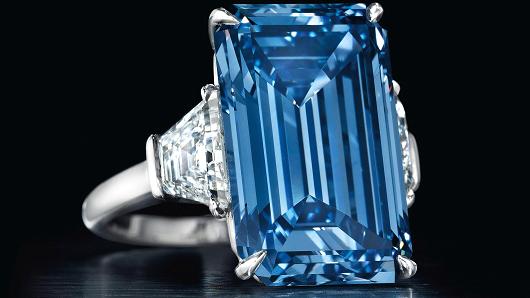
Capping a lively and even laughter-filled auction at Christie’s, the hammer came down to applause as the 14.62-carat stone, billed as the largest Vivid Blue diamond ever put up for auction, went to an unidentified buyer for a hammer price of 50.6 million Swiss francs — which excluded fees and the buyer’s premium.
That obliterated the pre-sale estimate range of between 38 million and 45 million francs.
The final tally also blew away the previous record for a diamond sold at auction by nearly $10 million: The 12.03-carat polished “Blue Moon” diamond went for $48.5 million in Geneva in November.
12.03-carat polished “Blue Moon” diamond
Christie’s spokeswoman Alexandra Kindermann said the bidding for the “Oppenheimer Blue” lasted over 25 minutes for the single lot, after starting at 30 million francs. The anticipation was often marked with tense pauses, groans and laughter.
The rectangular-cut diamond has been set in a ring and flanked by two smaller trapezoid-shaped diamonds. The stone got its name from the late Sir Philip Oppenheimer, who long oversaw De Beers mining and had given the stone to his wife.
Oppenheimer, who died in 1995 at age 83, helped De Beers gain control of the world diamond market by convincing the Soviet Union to let him market its gems. He started his career with the diamond-mining giant in 1933 as a diamond sorter and trainee salesman.
In diamond-business parlance, “provenance” matters. Raymond Sancroft-Baker, Christie’s director of European jewelry, said Oppenheimer “had the pick of all diamonds over a 50-year period, and this is what he picked out for his wife.”
“There’s been several other blue diamonds which have been sold in the past, but nothing really quite of this quality,” Sancroft-Baker said, adding that while the stone wasn’t internally flawless, it was “nearly perfect.”
The sale rounded out a two-day run of big-ticket jewelry auctions in Geneva. At Sotheby’s recently, a vivid, pearl-shaped pink diamond said to be the largest of its kind to go under the hammer sold for 27.3 million Swiss francs ($28 million) — at the low end of the pre-sale estimated price range.
In this age of synthetic, lab-grown diamonds, transparency is critical. Lab-created diamonds are chemical clones of their mined counterparts, so tracking and authentication must take place at every step of the process.
Synthetic diamonds are man-made diamonds grown in a lab with the same chemical, physical and optical properties and structure of natural diamonds. Aside from their origin, they are essentially identical to mined diamonds.
Beginning in the early to mid-1900’s, there were several experiments designed to create diamonds in a lab setting. Scientists tried to mimic the same conditions under which mined diamonds are created but were unsuccessful. However, in the 1950’s General Electric was successful in creating the first ever synthetic diamonds. Following this breakthrough, technology has improved dramatically and synthetic diamonds are being produced around the world.
There are two main ways synthetic diamonds are created.
High Pressure/High Temperature (HPHT) is the original method of creating synthetic diamonds, using heavy presses and high temperature to duplicate nature’s way of creating diamonds. Often times these diamonds are greenish, yellowish or slightly brown in color.
Chemical Vapor Deposition (CVD) uses a low pressure method. A seed crystal wafer is placed into a crystal growth chamber where carbon molecules and other ingredients are heated until a vapor cloud is created. That vapor covers the seed crystal in a film, molecule by molecule, until eventually a diamond is formed. It takes a few weeks to create, but the result is a beautiful, clear diamond with all the same properties as its mined counterpart.
“It is vital that man-made diamonds are properly identified and accurately represented to the jewelry-buying public,” says Bill Boyajian, graduate gemologist, former president of GIA, and founder and CEO of Bill Boyajian & Associates Inc. “Leading members of the diamond and jewelry trade have developed elaborate systems to clearly identify their gems and jewelry, to safeguard the public’s trust in their products,” he says.
In the United States, the Federal Trade Commission requires that any gem material produced in a laboratory be described in a way that leaves no doubt that it was not produced naturally. It is considered to be a deceptive practice if a synthetic gem material’s origin is not clearly disclosed at the time of sale. A number of industry organizations such as the American Gem Trade Association (AGTA), the International Colored Gemstone Association (ICA), and the World Jewellery Confederation (CIBJO) that have formulated specific guidelines regarding the disclosure of synthetic gems.
Before you choose a diamond for your next purchase, be sure to consult a GIA certified jeweler. At Grants Jewelry, every stone is accompanied by a written, detailed appraisal – a description and estimated retail replacement value of your piece. You will also receive a GIA or EGL certificate for each stone that provides all the available information about the diamond. Contact us today to work with a GIA certified jeweler and rest assured that your diamond is the stone you expect it to be.
You never know what you’ll find at the bottom of the sea.
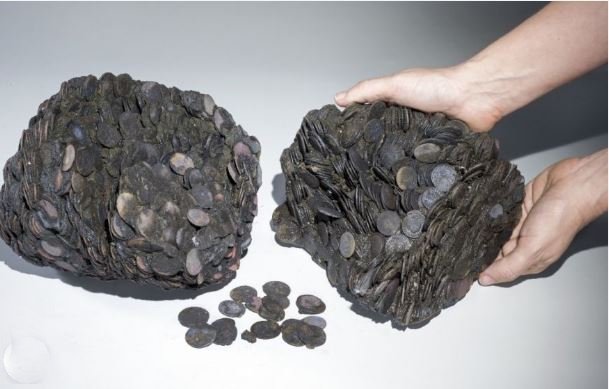
A couple of divers in the ancient Israeli port of Caesarea brought up some items from the seabed last month, leading to the discovery of a treasure trove of bronze statues, coins and other artifacts that went down with a cargo ship 1,600 years ago.
The divers notified the Israel Antiquities Authority of their find, leading to an extensive dive that found that a portion of the ocean floor had been cleared of sand, revealing the remains of a long-lost sailing ship along with iron anchors, the remains of wooden anchors and other items used in building and navigating the vessel.
But even more important was the cargo that sank with the ship. Among the artifacts the divers recovered were a bronze lamp depicting the image of the sun god Sol; a figurine of the moon goddess Luna; a lamp in the image of the head of an African slave; fragments of three life-size bronze cast statues; objects fashioned in the shape of animals; a bronze faucet in the form of a wild boar with a swan on its head; and fragments of large jars that carried drinking water.
All that and lots of money: 44 pounds of coins bearing the images of the emperor Constantine, who ruled the Western Roman Empire from 312 to 324 A.D. and was later known as Constantine the Great, ruler of the Roman Empire from 324 to 337 A.D.; and of Licinius, Constantine’s rival, who ruled the eastern part of the Roman Empire.
“A marine assemblage such as this has not been found in Israel in the past 30 years,” Jacob Sharvit, director of the Marine Archaeology Unit of the Israel Antiquities Authority, and Dror Planer, deputy director of the unit, said in a statement.
“Metal statues are rare archaeological finds because they were always melted down and recycled in antiquity. When we find bronze artifacts, it usually occurs at sea. Because these statues were wrecked together with the ship, they sank in the water and were thus ‘saved’ from the recycling process.”
The statues were in remarkably good condition, considering they’d been at the bottom of the Mediterranean for more than a millennium and a half.
“The sand protected the statues,” Sharvit and Planer said. “Consequently they are in an amazing state of preservation – as though they were cast yesterday rather than 1,600 years ago.”
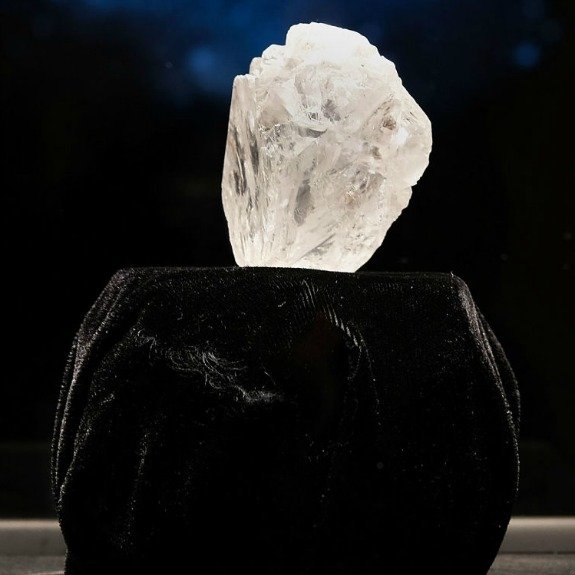
The Lesedi la Rona weighs 1,109 carats. This massive tennis-ball sized rough diamond, the second largest ever unearthed, is expected to fetch $70 million at auction this summer.
Found by the Lucara Diamond Corporation in Botswana late last year, the stone has since been named Lesedi la Rona, which mean “our light” in Tswana, the language spoken in the area. It is thought that the stone could be cut to 400 carats.
“Nobody knows what a 400-carat diamond is worth,” Lucara’s Chief Executive Officer William Lamb said in an interview with Bloomberg News. “There’s blue-sky potential,” he said. “You only need two people that desperately want it, and then you’ll get a good price.”
Sotheby’s David Bennett, worldwide chairman of the auction house’s jewelry division, echoed how hard it is to predict what will happen to a diamond this scale at auction. “No rough even remotely of this scale has ever been offered before at public auction.”
The stone is second in size only to the Cullinan Diamond, which was found in South Africa in 1905 and weighed in at 3,106 carats. It was later cut into the Great Star of Africa Gem in the British Crown Jewels.
The Lesedi la Rona weighs 1,109 carats. You’re probably looking for a stone that is just a bit smaller, so use the diamond search tool to find the perfect stone for your original design today.
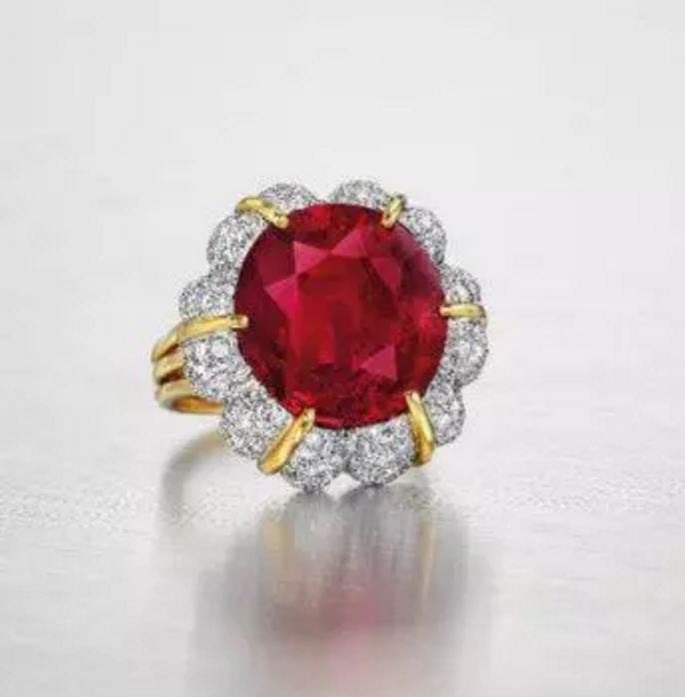
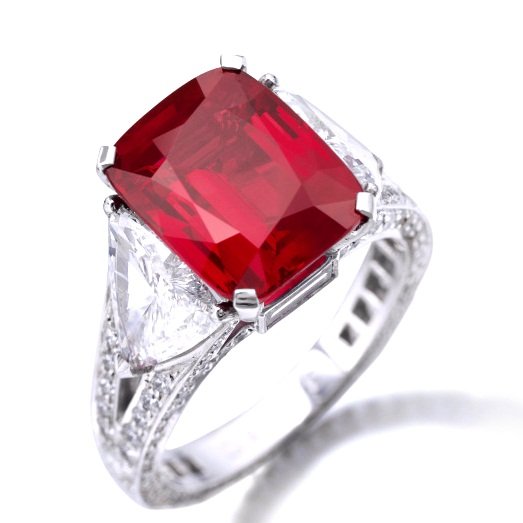
The Jubilee Ruby, a 15.99 ct. Burmese ruby and diamond ring, sold for $14,165,000
Christie’s set a record for the most expensive colored gemstone sold at auction in the United States with its sale of the Jubilee Ruby (pictured) on April 20 in New York.
The 15.99 ct. Burmese ruby and diamond ring by Verdura was estimated to sell for between $12 million and $15 million and fetched a price of $14,165,000. Christie’s disclosed that it was sold to a private European buyer.
“After selling the Jubilee Ruby, the most expensive colored gemstone sold at auction in the United States, we look forward to May 18 in Geneva where we will offer the 14.62 ct. Oppenheimer Blue diamond, the largest fancy vivid blue diamond ever offered at auction, and jewels from the collection of Princess Gabriela zu Leiningen,” said Rahul Kadakia, international head of Christie’s jewelry, in a statement.























 All About Sapphires
 A Two-Day Event











 Pearls
 Elizabeth I ruled as Queen of England for forty years until her death in 1603. Abstemious in many ways, she nevertheless fed her extravagant fondness for pearls—thousands of pearls. Her crowns were adorned mainly with pearls. Imbedded into her starched and lacy coronets, her 3,000 gowns and 80 wigs were pearls. Necklaces, earrings, pendants, and yes, shoes—adorned with pearls—pearls of great price.