
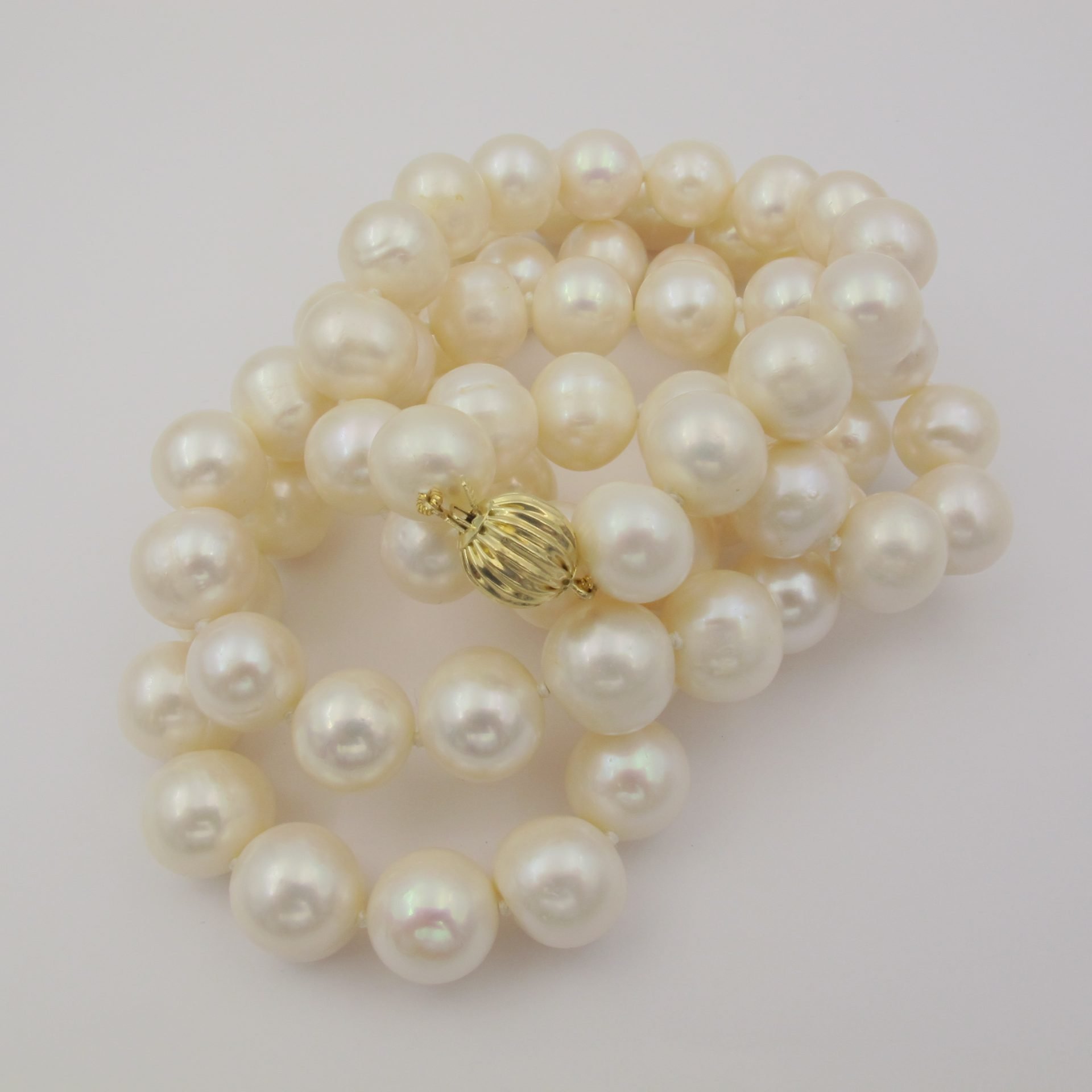
“The rarest things in the world, next to a spirit of discernment, are diamonds and pearls.” -Jean de la Bruyere…

The discovery of the pearl is not attributed to any one person in particular. It is believed that they were first discovered by people searching for food along the seashore. A fragment of pearl was found in the sarcophagus of a Persian princess that dates back to 420 BC. Pearls were presented as gifts to Chinese royalty as early as 2300 BC, and a Chinese historian wrote about pearls for the first time in 2206 BC. According to legend, Cleopatra crushed a pearl into a glass of wine to prove to Marc Antony that she could give the most expensive dinner in history.

Natural pearls are extremely rare. Many hundreds of pearl oysters or mussels must be gathered and opened to find even one wild pearl. Historically, many were found in the Persian Gulf; unfortunately, today, most have already been harvested. Natural pearls are usually the result of an accident, or an injury sustained by the mollusk. The reaction to the irritation is the secretion of a substance called nacre, which coats an irritant or foreign object. That reaction is repeated over and over, resulting in the formation of a pearl.
Cultured pearls are created when a mother-of-pearl bead or a piece of tissue is inserted into a mollusk to start the process of growing a pearl. The mollusks are raised until they are old enough to accept a mother-of-pearl bead implant; once implanted the mollusks are returned to the water and cared for in pearl farms. Pearls can be raised in either saltwater or freshwater. There are also different types of mollusks that produce pearls. The type of mollusk and the type of water will determine the look of the resulting pearl.

Cultured pearls are farmed in both saltwater and freshwater. The type of water will determine the look of the resulting pearl.
Saltwater pearls include Akoya Cultured Pearls, the South Sea Pearl and Tahitian Black Pearls.
Freshwater Pearls are grown in freshwater lakes, rivers, and ponds, predominately in China. Most freshwater pearls are white and resemble the akoya cultured pearls in shape and size, but they can be produced in various shapes and array of pastel colors. Many freshwater pearls don’t have a mother of pearl bead implant. Instead a piece of tissue is used, resulting in a pearl with thicker nacre.
Content and Images Courtesy of GIA, The Jewellery Editor, Wikipedia & The American Gem Society
Interested in more stories like this? Join Us On Social Media. 

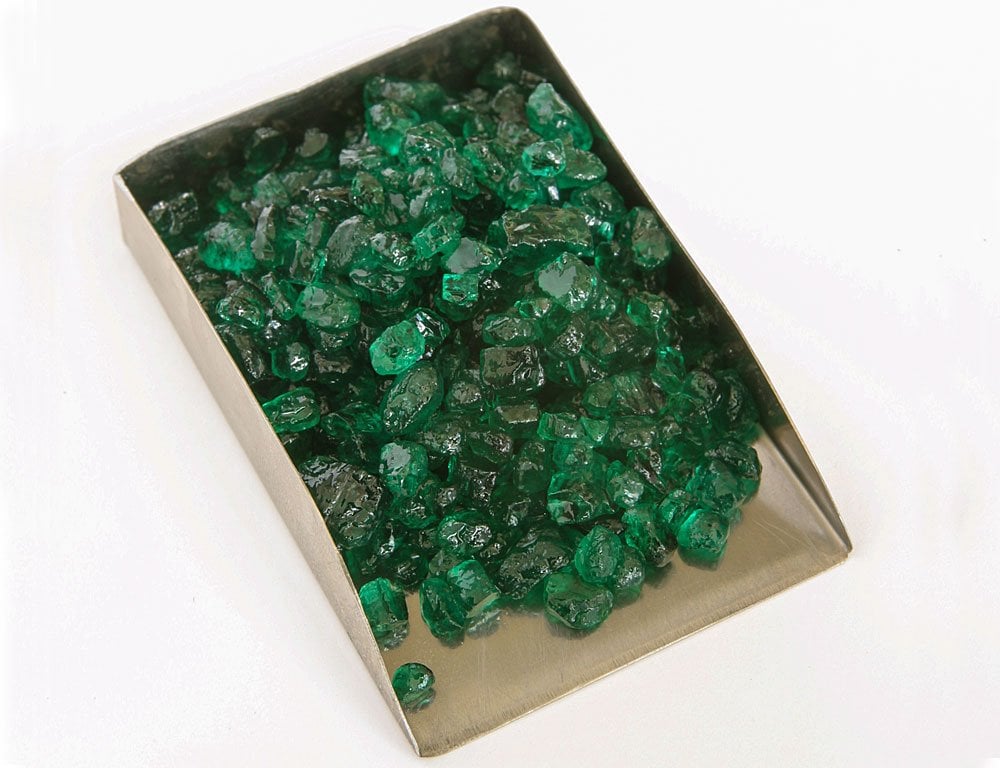
Emerald is a precious gemstone and a variety of the mineral beryl colored green by trace amounts of chromium and…
 Emerald is the bluish green to green variety of beryl, a mineral species that also includes aquamarine. They are the rarest of the colored gemstones and a much softer gem, making them more expensive and highly desirable. Emeralds are found in granite, pegmatites, and schists, as well as alluvial deposits. Some emeralds find their way into gravels where the action of the water tumbles and smooths them so they resemble shiny pebbles.
The first known emerald mines were in Egypt, dating from at least 330 BC into the 1700’s. Cleopatra was known to have a passion for emerald, and used it in her royal adornments. The Irani State Treasure contains an exquisite collection of Emeralds, as well as the Emerald tiara of ex-Empress Farah.

Shah Jahan, one of the moguls of India that built the Taj Mahal, loved Emeralds so much that he had sacred texts inscribed into them and used these gemstones as talismans. The ancient writings of Veda, the sacred text of Hinduism, testifies to Emerald as being the “gem of good luck” and the “gem that improves one’s well-being”. These “Mogul Emeralds”, as they are known today, can be found in modern museums and collections.

Emerald’s lush green is said to have “soothed souls and excited imaginations” since antiquity. Rome’s Pliny the Elder described emerald in his Natural History, “…nothing greens greener”. He described the use of emerald, saying that they have found “no better method of restoring their eyes than by looking at the emerald, its soft, green color comforting and removing their weariness and lassitude.” Even today, the color green is known to relieve stress and eye strain.

Its vibrant green color reflects new spring growth, which makes it the perfect choice of a birthstone for the month of May. It’s also the gemstone for twentieth and thirty-fifth wedding anniversaries.
Interested in more stories like this? Join Us On Social Media.

We send periodic email announcements and a monthly newsletter with clips to our favorite News & Events stories. Subscribe today.
[salesforce form=”5″]
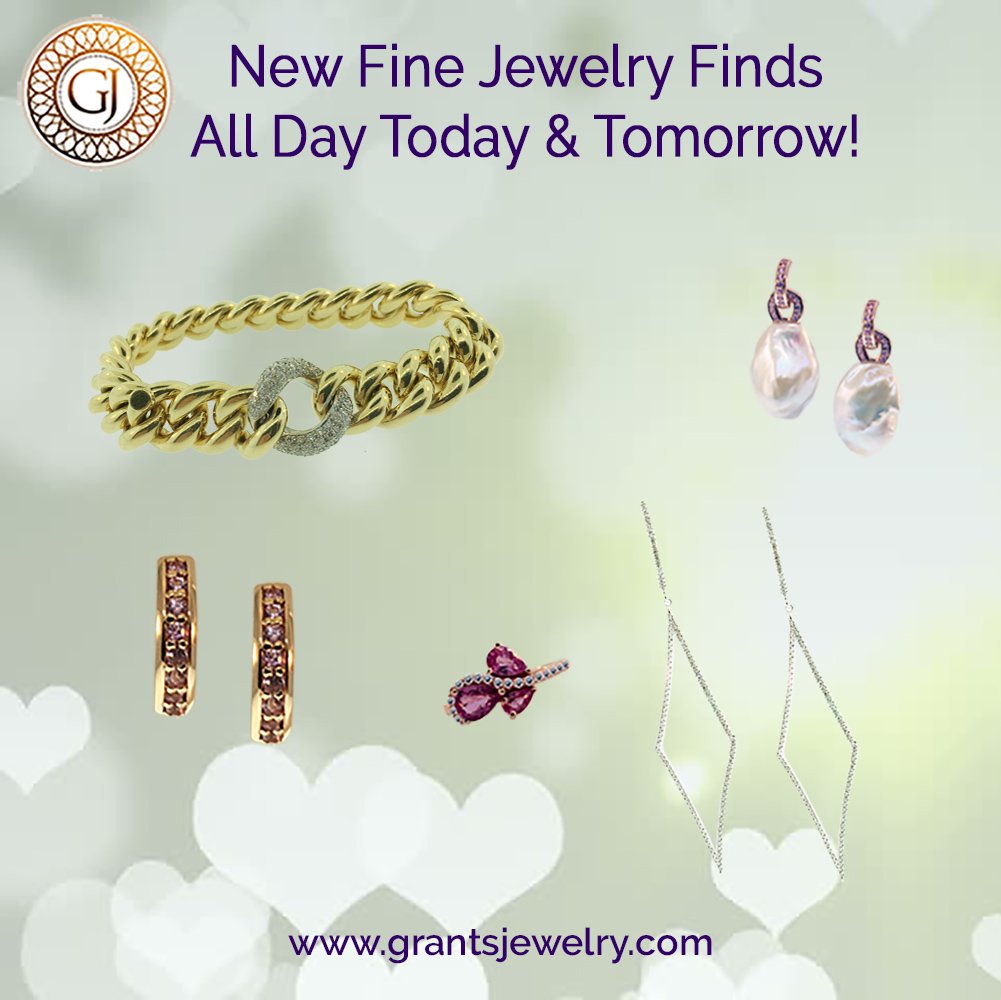
New Fine Jewelry & Custom Engagement Rings
You don’t want to miss this. All day today and tomorrow, new products from the showroom will be featured on our Social Media channels to help you find the perfect gift for your Valentine! Pendants, earrings, and bracelets featuring emeralds, rubies, sapphires, and of course the beloved diamond.
And just in case you need inspiration, tomorrow we’ll include some of our newest custom Engagement ring designs. Custom ring design is easy and affordable, and you’ll end up with a ring that perfectly embodies your One-of-a-Kind love story.

So be sure to join us on Social Media. And don’t worry – if you miss a product you can always see what’s new in the Latest Arrivals section of the home page. See you on Facebook, Instagram and Twitter later today!
Interested in more stories like this? Join Us On Social Media.
We send periodic email announcements and a monthly newsletter with clips to our favorite News & Events stories. Subscribe today.
[salesforce form=”5″]
Tips to ease the stress of finding the perfect gift for your Valentine this year!
Read story

Stressed about buying the perfect Valentine’s Day gift for your sweetheart? You are not alone. Americans spent nearly $20 billion on Valentine’s Day last year! And if jewelry is on your list, you’re in good company – more than 20 percent of people buy jewelry for Valentine’s Day.
Make sure your significant other knows just how you feel this year. Following are some tips to ease the stress of choosing the perfect gift.

Be sure to choose something that suits her taste and style – you want something she will wear!
Bonus Tip: Pair Jewelry With An Extra “Gift” For the Perfect Finishing Touch
Enjoy the process, even if it seems overwhelming, and don’t stress out over the jewelry decision. Your sweetheart will appreciate the thought you put into the jewelry and wear it with pride, knowing you chose it just for her.


If your sweetheart is the classic and elegant type, browse diamond essentials. These studs, pendants, hoops and bracelets that are staples of every jewelry collection.

If you are looking to make a bolder statement, find a one-of-a-kind piece of fine jewelry – a cuff bracelet, a stunning pendant, or a cocktail ring perhaps.
Both collections feature something in every budget range. Need help determining what the best choice is for you? Contact Susan today. Take advantage of her expertise in diamond selection or let her suggest the perfect custom piece in our collection. Many pieces are available for immediate or next day delivery.
Email [email protected] or call 212-398-1256.
Interested in more stories like this? Join Us On Social Media.
We send periodic email announcements and a monthly newsletter with clips to our favorite News & Events stories. Subscribe today.
[salesforce form=”5″]
Simply print, check the scale and measure. If you can't be measured by a jeweler, or you want to keep a ring purchase a surprise, this is the…
Read story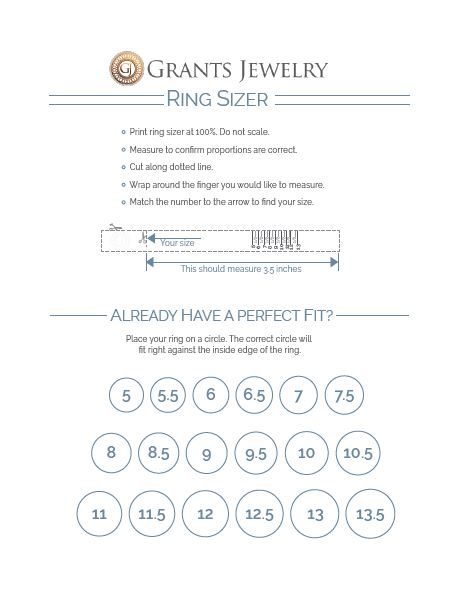
Need to know your ring size? Or her ring size? While the best way to ensure a proper fit is to be measured by your jeweler, sometimes it’s just not possible. So if you can’t get to your jeweler in person, or you want to figure out her size without tipping your hand, use our new Ring Sizing Tool.

Simply click here to download the Ring Sizer Page, print at full size and follow the instructions.

Ready to shop for THE ring? Creating a one-of-a-kind engagement rings is fun, easy and affordable. And the result is a ring that will make her fall in love with you all over again! Seven in ten men need help when choosing an engagement ring, but you don’t need to go it alone. Browse some of our creations for inspiration, get started HERE or contact Susan today.
Interested in more stories like this? Join Us On Social Media.
We send periodic email announcements and a monthly newsletter with clips to our favorite News & Events stories. Subscribe today.
[salesforce form=”2″]
Choosing the right ring doesn't have to be hard - Don't be overwhelmed, let Susan help!
Read story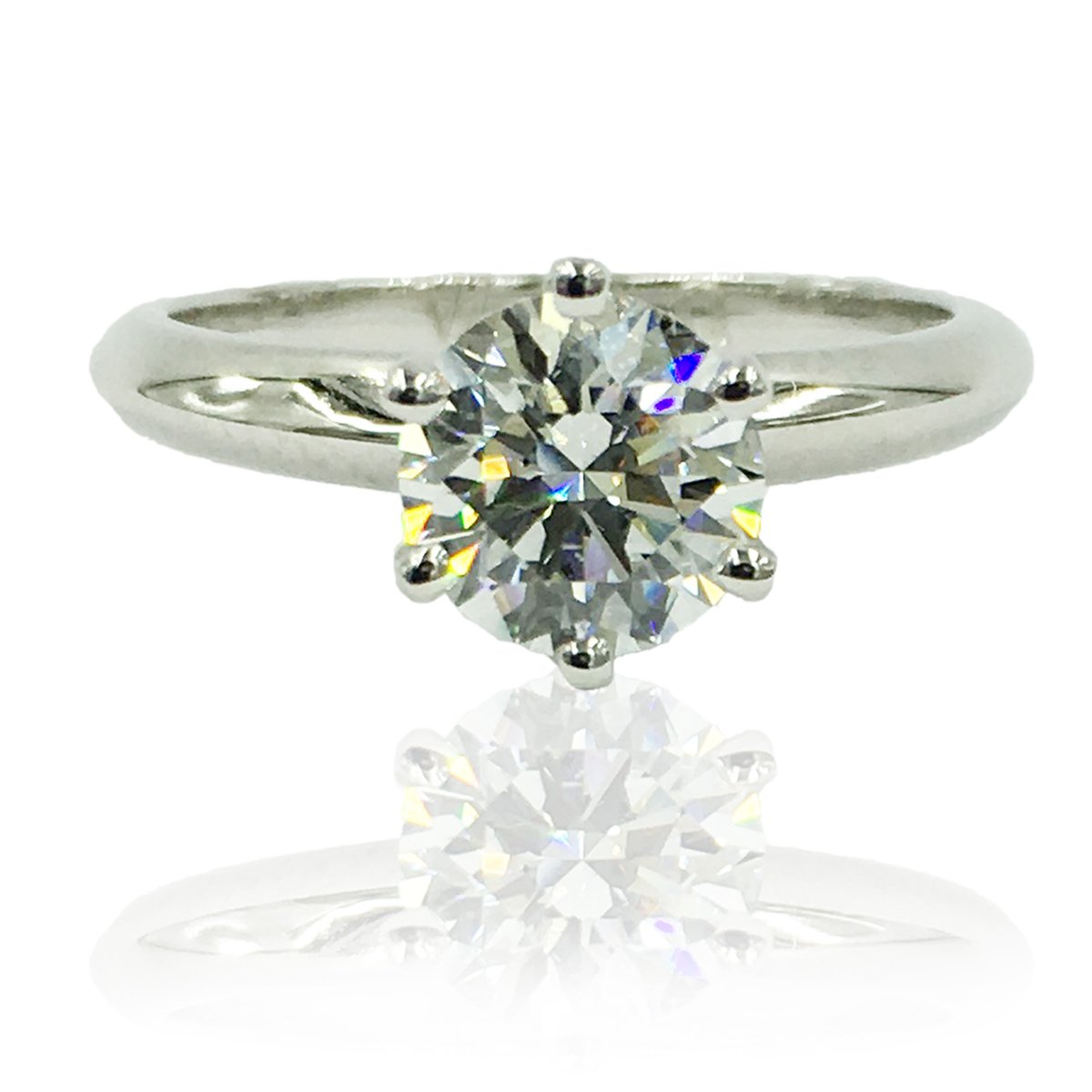
A recent study by Wedding Website The Knot polled 14,000 engaged or recently married brides and grooms across the United States. 72 percent of grooms said they faced challenges in buying a ring, including not knowing if they were getting a good deal (35 percent) and not knowing diamond terminology (28 percent).


Some other statistics:
Average number of rings examined before purchase: 26
Percentage that bought a custom-designed ring: 45 percent
Most popular shape: Round (52 percent)
Average center-stone carat size: 1.2 carats
Average ring total carat weight: 1.8 carats
Most popular ring metal: White gold (61 percent)
If you are in the 72%, good news – you don’t have to go it alone! Let Susan help you design the perfect custom ring, according to your budget and style. Reach out today.
Learn more about Custom Design here.
For more jewelry information from The Knot survey, click here.
Interested in more stories like this? Join Us On Social Media.
We send periodic email announcements and a monthly newsletter with clips to our favorite News & Events stories. Subscribe today.
[salesforce form=”2″]
Check out Vince's Proposal! We've heard that Nicole loves her custom-made Grants Jewelry engagement ring!
Read story
Check Out Vince’s Proposal to Nicole!
Interested in more stories like this? Join Us On Social Media.
We send periodic email announcements and a monthly newsletter with clips to our favorite News & Events stories. Subscribe today.
[salesforce form=”2″]
These three types of opal are all very different from one another. It wasn't until recently that we understood how each differed from one another, and from traditional…
Read story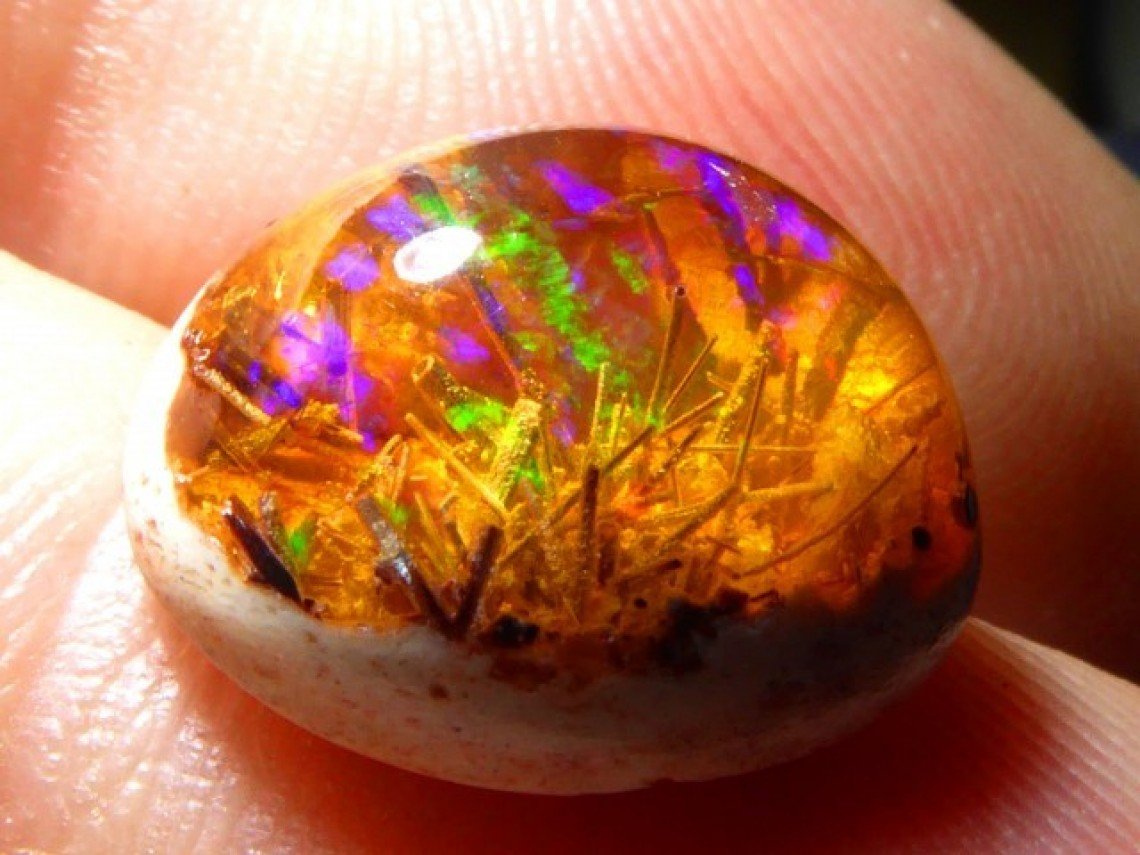
These three types of opal are all very different from one another. It wasn’t until recently that we understood how each differed from one another, and from traditional opals.
Yowah Nut Opal

Yowah nut opal are really small boulder opals that look roughly like a nut from a tree. They can be as small as an apricot seed or as large as a Mango seed. When the “nut” opens up it reveals layers of brown, roundish patterns much like a lemon peel that eventually, as you get to the center of the stone, end up in either an empty cavity or an area filled with opal.
How the ‘kernel’ of the nut get filled with precious opal? That was a complete mystery until geologists and others worked out that a long time in the past the boulder ironstone ‘nuts’ were not as hard as they are today. In fact, at one stage of the development they were quite porous, allowing a mater based chemical mix, seep down into them. In time, this chemical ‘soup’ containing silica, dried out and left a residue which ended up being either common or precious opal.
Phantom Ghost Opals
Some Ethiopian opals have a natural Phantom ghost. These opals are called Phantom Ethiopian opals and are also known as Ghost Phantom Opals.
It is thought that Ethiopian opal is formed differently than sedimentary opal and this allows for this unique ghost inclusion in these opals. It does not form in any other opals. Most are formed with smooth coverage inside the opal but the more rare ghosts are ones formed like bubbles or cloud formations.
The Opal is mostly transparent crystal opal on the outside layer and the inner ghost cloud like inclusion is inside the crystal shell of the opal. The Ghost phantom can be milky white to grey and black or even semi translucent in itself. It does not affect the overall color of the crystal fire and sometimes it looks like the ghost can have opal colors but this is the crystal around the ghost that gives this effect.

There are so many different names in use for this type of opal: fire opal, jelly opal, crystal opal, cherry opal. The final mysterious opal is unique Mexican Opal that has brilliant fire colour but also has rutillated needles inside the Opal. It is really a mystery on how this Opal was formed this way. Opal is silica and Mexican Opal is volcanic, so to have rutilated needles form inside the silica or Opal it needed to have cavities.

Interested in more stories like this? Join Us On Social Media.
We send periodic email announcements and a monthly newsletter with clips to our favorite News & Events stories. Subscribe today.
[salesforce form=”2″]
“Emeralds,” “Rubies” and “Diamonds” will dazzle as never before as three of the world’s top dance companies share the stage for the first time to mark the…
Read story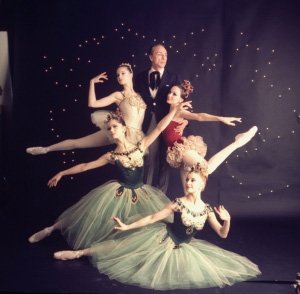

“Emeralds,” “Rubies” and “Diamonds” will dazzle as never before as three of the world’s top dance companies share the stage for the first time to mark the 50th anniversary of “Jewels,” currently on stage at Lincoln Center.
Choreographer George Balanchine created Jewels in 1967; in three acts honoring the French, American and Russian styles that shaped his career. The ballet has been performed many times over since it’s debut.

For the anniversary performances at New York’s Lincoln Center, the Paris Opera Ballet will dance “Emeralds,” the New York City Ballet and the Bolshoi Ballet will alternate in both “Rubies” and “Diamonds”.
The three acts of the ballet are very distinct, much like the precious gems they are named for. Emeralds is described as a very pure dance. Refined & elegant movements are the hallmark of this act. Rubies, in contrast, is described as glamorous and powerful. There are multiple leads in Rubies, and the lead ballerina describes the performance as fast and hard-edged. Finally, Diamonds is a bold movement, which follows the formula of traditional ballets and focuses everything on the lead ballerina.

When Balanchine was creating Jewels for the New York City Ballet 50 years ago, he revealed that he had been inspired by a visit to Van Cleef & Arpels and posed for pictures with ballerinas wearing gem-encrusted tiaras.
Source: NYTimes
Interested in more stories like this? Join Us On Social Media.
We send periodic email announcements and a monthly newsletter with clips to our favorite News & Events stories. Subscribe today.
[salesforce form=”2″]
The worldwide community of museums will celebrate International Museum Day on and around 18 May 2017. The International Council of Museums (ICOM) established International Museum Day in 1977…
Read story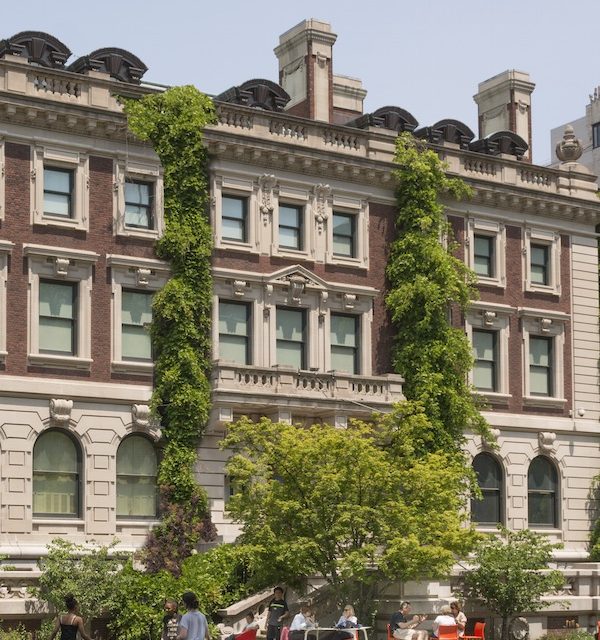
The worldwide community of museums will celebrate International Museum Day on and around 18 May 2017. The International Council of Museums (ICOM) established International Museum Day in 1977 to increase public awareness of the role of museums in the development of society, and it has been steadily gaining momentum ever since. In 2016, International Museum Day garnered record-breaking participation with more than 35,000 museums hosting events in some 145 countries.

The theme of International Museum Day 2017 is Museums and contested histories: Saying the unspeakable in museums.
This theme focuses on the role of museums as hubs for promoting peaceful relationships between people. It also highlights how the acceptance of a contested history is the first step in envisioning a shared future.
New York City is home to top-notch museums in art, architecture, photography, natural history, television, radio and technology – NY.com says there are 83 museums in total among the 5 boroughs! You can find a listing and links HERE.
Just last week, we were looking at Art Deco jewelry. During the Art Deco period (1910 – 1939) influences that fueled design burst of innovation, exoticism, and modernity flowed back and forth across the Atlantic. Jazz music, a uniquely American art form, also found a ready audience in Europe. An apt metaphor for the decade’s embrace of urbanity and experimentation, jazz captured the pulse and rich mixture of cultures and rhythms that brought a new beat to contemporary life.
 This era is currently being celebrated in The Jazz Age: American Style in the 1920’s, the first major museum exhibition to focus on American taste during the creative explosion of the 1920’s. The Jazz Age is a multi-media experience of more than 400 examples of interior design, industrial design, decorative art, jewelry, fashion, and architecture, as well as related music and film at The Cooper-Hewitt, National Design Museum, Smithsonian Institution.
Located at 2 East 91st Street between 5th and Madison Avenues, Cooper Hewitt is housed in the former residence of Andrew Carnegie, a New York City and national historic landmark. The Jazz Age will be on display at Cooper Hewitt now through Sunday, August 20 2017.
Also on display at Cooper Hewitt is Jeweled Splendors of the Art Deco Era: The Prince and Princess Sadruddin Aga Khan Collection. The display features jeweled objects that highlight the creative and spirited era broadly examined in The Jazz Age: American Style in the 1920s and showcase the collecting skills of Prince and Princess Sadruddin Aga Khan. The Prince and Princess valued intricately detailed pieces – Persian miniatures, early books and manuscripts – and their eye for complex creations is manifest in the pieces on display.
Interested in more stories like this? Join Us On Social Media.
We send periodic email announcements and a monthly newsletter with clips to our favorite News & Events stories. Subscribe today.
[salesforce form=”2″]
Join Us Wednesday, Sept 22 from 4 -8pm for The 5th Annual Sapphire Event! Learn about Sapphires Sapphire is a precious gemstone, a variety of the mineral corundum.…
Read story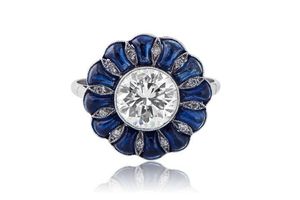

Sapphire is a precious gemstone, a variety of the mineral corundum. It is typically blue, but natural “fancy” sapphires also occur in yellow, purple, orange, and green colors. Prized throughout the ages, padparadscha sapphires are as beautiful and exotic as their name. The term padparadscha is derived from the Sinhalese word for a salmon colored lotus blossom. Overall, padparadscha sapphires are pinkish orange in color, but do vary in hue and tone.
Greeks wore sapphire for guidance when seeking answers from the oracle. Buddhists believed that it brought spiritual enlightenment, and Hindus used it during worship.

Interested in more stories like this? Join Us On Social Media.