Discovering Your Signature Jewelry Style: A Personal Jeweler’s Guide
As a personal jeweler, I understand that jewelry is more than just an accessory; it’s a reflection of your personality, style, and individuality. Your choice of jewelry can speak volumes about who you are, and finding your signature jewelry style is an exciting journey of self-discovery. Whether you’re new to the world of jewelry or looking to refine your collection, I’m here to guide you through the process of choosing your signature jewelry style. A few things to consider as you browse our collection at Grants Jewelry:
Embrace Your Unique Personality
The first step in finding your signature jewelry style is to embrace your unique personality. Think about what makes you feel confident, comfortable, and happy. Are you a classic and elegant individual, drawn to timeless pieces like pearls and delicate gold chains? Or do you prefer bold and statement-making jewelry that captures attention and sparks conversation? Recognizing your personality traits will help you identify the style that resonates with you the most.
Consider Your Lifestyle
Your lifestyle plays a significant role in determining the practicality and wearability of your jewelry. If you lead an active lifestyle, you may want to opt for durable and versatile pieces that can withstand daily wear. On the other hand, if you attend frequent formal events or work in a more conservative environment, investing in sophisticated and refined jewelry might be the right choice. Select pieces that seamlessly blend with your lifestyle while enhancing your overall look.
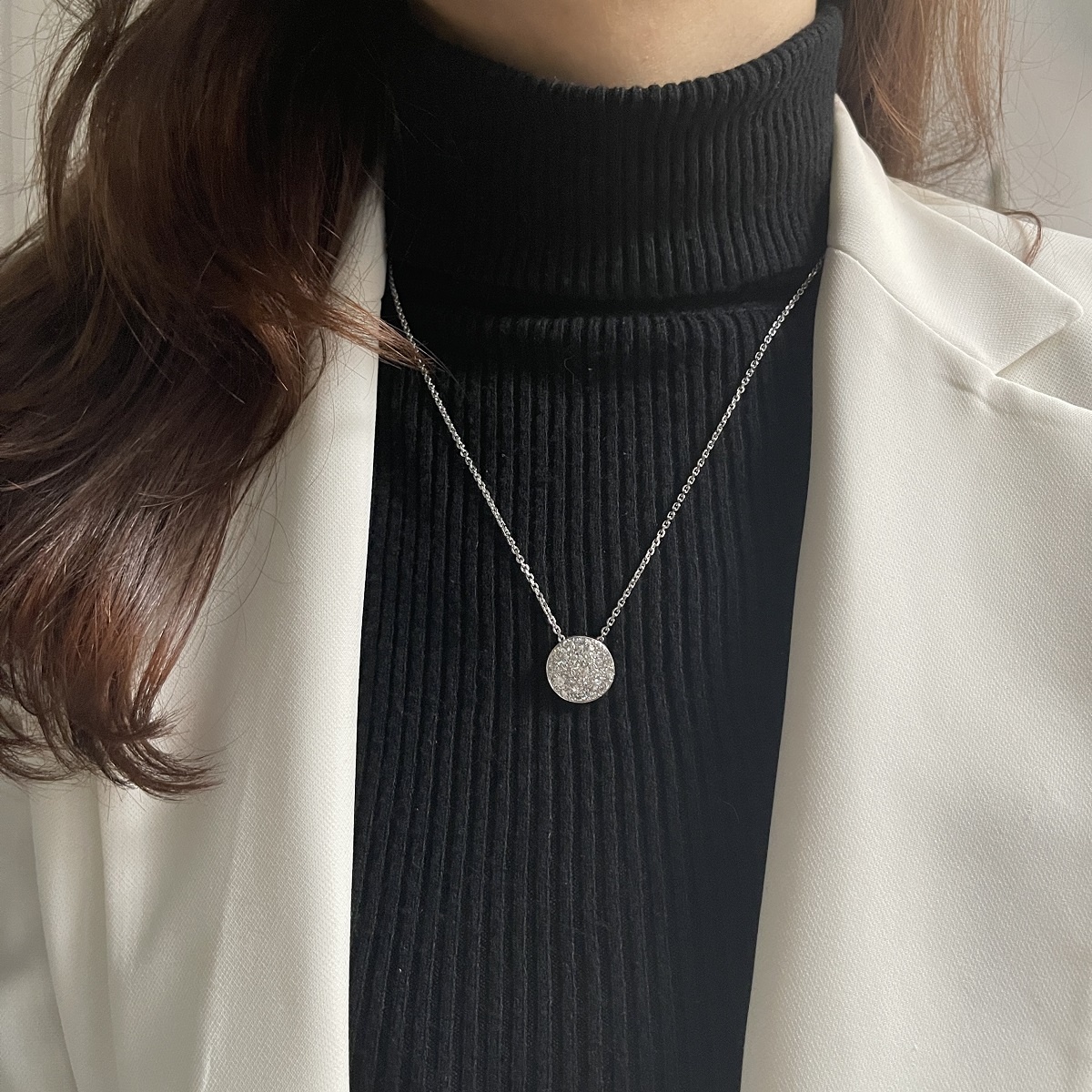
Every jewelry collection should have a foundation of essential pieces that can be mixed and matched effortlessly. Begin with classic and timeless designs that never go out of style. For example, a pair of diamond studs, a simple pendant necklace, and a versatile bracelet can be the backbone of your jewelry wardrobe. These basics will provide a solid starting point for adding more unique and personalized pieces later on.
Experiment With Different Metals
The choice of metal can significantly influence the style and appearance of your jewelry. Yellow gold exudes warmth and tradition, while white gold or platinum offers a contemporary and sleek look. Rose gold, with its romantic hue, can add a touch of femininity to any piece. Don’t be afraid to mix and match different metals to create a diverse and eclectic collection that represents your taste.
Seek inspiration to help define your signature jewelry style. Think of jewelry that resonates with you and analyze what aspects of those pieces appeal to you the most.
Ultimately, choosing your signature jewelry style comes down to following your instincts and trusting your taste. Don’t feel pressured to conform to current trends or the latest fads. Instead, focus on what genuinely makes you happy and confident when wearing your jewelry. Your signature style should be an authentic representation of yourself, showcasing your tastes and preferences without compromise.
Choosing your signature jewelry style is a journey of self-exploration and creativity. Embrace your individuality, consider your lifestyle, and invest in timeless pieces that form the foundation of your collection. Be open to experimentation, seek inspiration, and infuse sentimental value into your jewelry selection. Trust your instincts, and if needed, consult a personal jeweler who can offer their expertise in helping you curate a jewelry collection that truly reflects your unique personality and style.
Remember, your signature jewelry style should be a celebration of you—confident, elegant, and entirely authentic. Happy jewelry hunting!
You may have seen Pearls referred to by “grade”: A, AA, AA+, and AAA. But how is that grade determined? Much like the 4 C’s of Diamonds, there are established benchmarks to determine the quality of pearls. Six factors are evaluated in order to determine the quality and therefore the value of pearls. Those factors are size, shape, color, surface, nacre and luster.
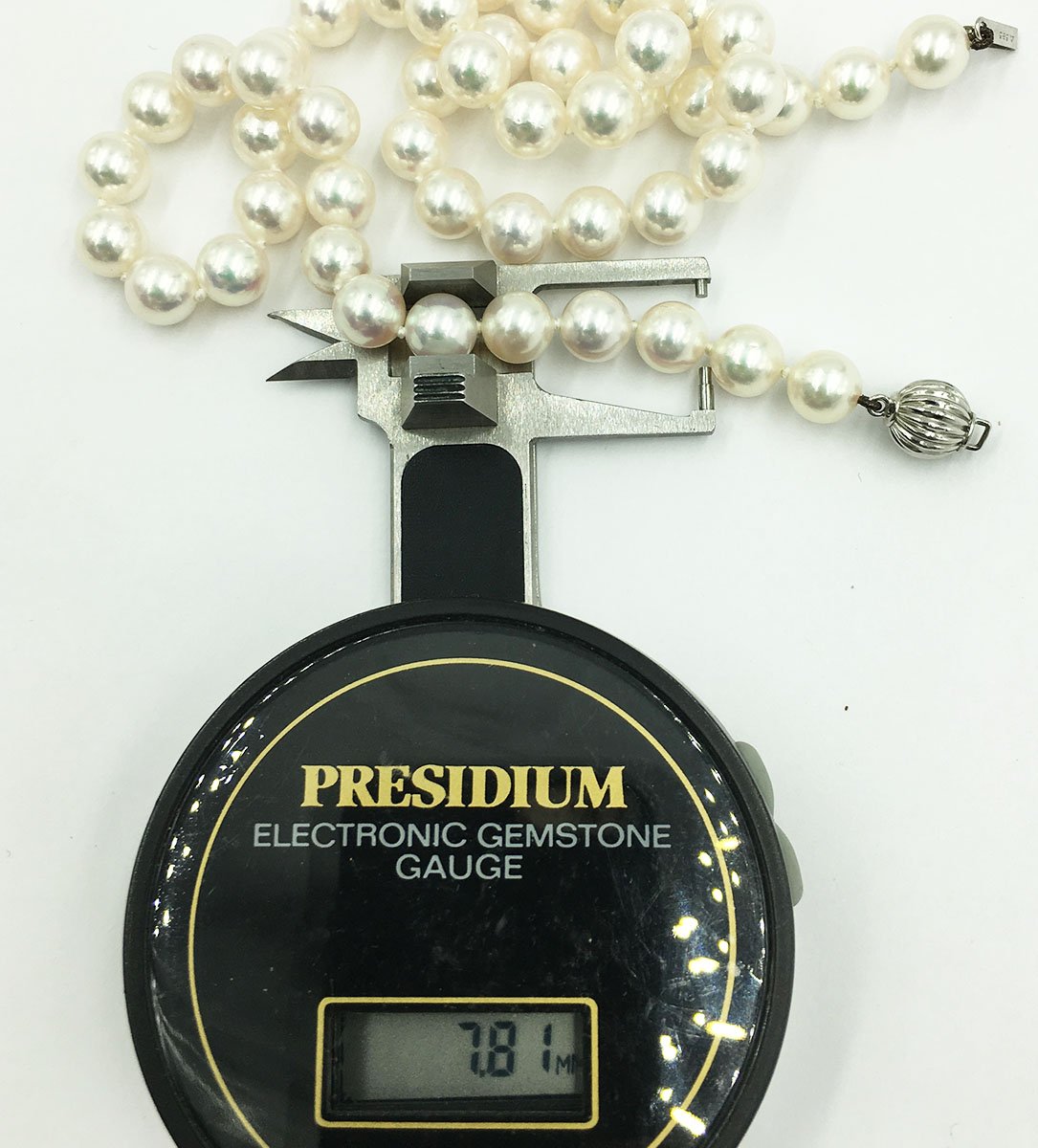
Some of those factors are more straightforward than others – take size, for example. When all other value factors are equal, larger pearls are rarer and more valuable than smaller pearls of the same type. Pearls are measured by their diameter in millimeters. Even a one millimeter increase in pearl size is a substantial jump in both appearance and value.
Shape is also fairly easy to understand . A perfectly round pearl is the most difficult shape to culture, making it the rarest cultured pearl shape. Again, if all other factors are equal, a perfectly round pearl is generally the most valuable. There are some shapes that are exceptions to that rule though. If well-formed, a pear, oval, or baroque (irregularly shaped) cultured pearl can also be valuable. And while Baroque pearls can be lustrous and appealing, they will typically cost less than round pearls. They are sometimes known as Potato Pearls.
Pearls are found in a wide range of colors, although all pearl colors tend to be soft or muted. The color is described by three components, Pearl color can have three components. The body color is the pearl’s dominant overall color. Overtone is one or more translucent colors that lie over a pearl’s body color. And orient is a shimmer of iridescent rainbow colors on or just below a pearl’s surface. All pearls display body color, but only some show overtone, orient, or both.
The value of a color is largely tied to the current trends – if a color is in demand, it will become more valuable. Most people automatically picture a white Akoya cultured pearl as it is the pearl most commonly used in necklaces. Some Tahitian saltwater cultured pearls have a color intensity that’s almost like neon lights. And a Black Tahitian Pearl is not in fact black – generally they are charcoal grey, silver, or dark green.
Most pearls never achieve perfection. Imperfections on the pearls surface determine it’s surface quality. Some might have abrasions that look like a series of scratches on the surface, or an irregular ridge that looks like a crease or wrinkle. The more imperfections present, the more they will detract from the look of the pearls, decreasing value significantly. Those imperfections also compromise the structure of the Pearl, making it weaker and Small imperfections can sometimes be hidden with a mounting or a drill hole.
Luster and nacre quality are closely related.
Nacre is the natural substance that a mollusk secretes to protect itself from irritants such as shell fragments, parasites or implanted beads. It is a strong, resilient material; lightweight and transparent, allowing light to pass through its surface. A thin layer of nacre will cause the pearl to have a dull, chalky appearance.
The nacre quality affects the luster as well as the durability of the pearl. Nacre is also the beautiful iridescent coating on the inner surface of the mollusk’s shell. That coating is known, appropriately, as Mother Of Pearl.
Luster is the measure of quantity and quality of light that is reflected from the surface, or just under the surface of a pearl. It is what gives a natural or cultured pearl its unique beauty. The luster of good quality pearls is sharp and bright. You should be able to see your reflection clearly on the surface of a pearl. Any pearl that appears too white, dull or chalky, is of low quality.
Excellent – Reflections appear bright and sharp
Very Good – Reflections appear bright and near sharp
Good – Reflections are bright but not sharp, and slightly hazy around the edges
Fair – Reflections are weak and blurred
Poor – Reflections are dim and diffused
Within a pearl type, when other value factors are equal, the higher the luster, the more valuable the pearl.
“Matching” A jewelry designer will sometimes deliberately mix colors, shapes, and sizes for unique effects. For most pearl strands, earrings, or other multiple-pearl jewelry, the pearls should match in all the quality factors, especially size. The better the matching, the more valuable the piece will be.
At Grants Jewelry, we can get pearls of any type and color. Traditional strands are sold in 18″ lengths, with AA+ quality Akoya Cultured Pearl Strands starting at $4,700 per strand. Contact Susan today to create the perfect pearl necklace for you! Call (212) 398-1256 or email [email protected].
Sources: GIA.edu, Wikipedia
Interested in more stories like this?Join Us On Social Media.
We also send periodic email announcements and a monthly newsletter with clips to our favorite News & Events stories. Subscribe today.
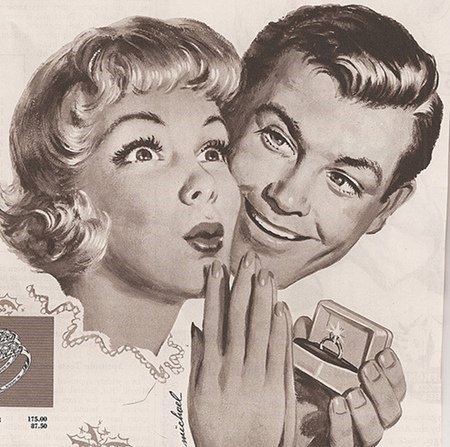
After the initial excitement of your engagement, or as you shop for your ring, you may find yourself wondering when the custom of giving a ring first began. And why? Anthropologists believe the tradition originated from a Roman custom – wives wore rings attached to small keys, indicating their husbands’ ownership.
Pope Innocent III instituted rules that led to the giving of rings.
Others cite a true origin in the 12th century, when Pope Innocent III laid down some new ground rules about weddings. All weddings had to take place in a church, and the bride had to receive a ring. Moreover, couples had to observe a new waiting period between their betrothal and marriage. At that time, European aristocrats began giving engagement rings to their beloveds while they counted down the days until they could actually wed.
In 1477, Archduke Maximilian of Austria commissioned the very first diamond engagement ring on record for his betrothed, Mary of Burgundy. This sparked a trend for diamond rings among European aristocracy and nobility.
Early Victorian Keeper Ring
The custom of giving Early Victorian engagement rings was not well established until the 1890s. Early-century brides were given “keeper” rings, a custom which began in 1761 with King George III and his intended, Princess Charlotte. George gave Charlotte a gold band encrusted with diamonds prior to their wedding. These keeper (or guard) rings later served to protect the wedding ring from slipping off the finger. This custom continued into the Early Victorian Era, so many of the rings call Early Victorian engagement rings today were originally crafted to be worn as wedding bands set into or behind said guard rings.
The Shift From Keeper Rings to Diamond Engagement Rings
The rock Archduke Maximilian of Austria gave to Mary of Burgundy in 1477 was actually an exception- Diamonds actually a fairly late addition to the traditional engagement ring. There simply weren’t all that many diamonds on the world market, so diamond engagement rings were rare – other gemstones were much more commonly used at that time.
In the 1870’s, miners began discovering huge veins of diamonds in South Africa, and they rapidly flooded world markets. Diamonds quickly went from scarce gem to common commodity, bad news for everyone in the diamond business. Mine owners realized they would have to take action to continue to profit from this increasingly common gem. So, in 1888, several major South African mines merged together to form De Beers Consolidated Mines, Ltd. The merger created a force that could effectively control the flow of diamonds from South Africa onto world markets. As diamonds became scarcer and more valuable, their popularity as the gem on engagement rings began to rise.
De Beers Historical Mine
Who Said Diamonds Are Forever Anyway?
Today, we think of the diamond engagement ring as a time-honored tradition. Really though, that tradition is the result of a brilliant marketing plan that started in the late 1930s. Diamond demand and prices were steadily declining. A poor economy led consumers to favor more modest rings that included intricate metalwork rather than gems. DeBeers needed to jumpstart revenues, and so they approached New York ad agency N.W. Ayer for help.
De Beers Campaign Image
The campaign that the agency created in response was undoubtedly one of the most effective of all time, convincing Americans that they desperately needed diamonds. A multi-pronged attack that completely overhauled Americans’ view of diamonds. The agency got Hollywood’s biggest stars to wear diamonds and encouraged leading fashion designers to talk up diamond rings as an emerging trend. In the first three years of the campaign, American diamond sales shot up by over 50 percent.
A Diamond Is Forever Advertisement
In 1947, De Beers launched its now classic slogan, “A Diamond is Forever” a line so elegant and effective De Beers is still using it almost 70 years later. The slogan helped underscore the diamond’s significance as an enduring, unbreakable symbol of love, and the sales of diamond engagement rings shot through the roof. Within 20 years, 80 percent of American brides were sporting rocks. The diamond’s purity and sparkle are now symbols of a man’s commitment to the woman he loves in practically every corner of the world.
Tradition grew as diamond cuts evolved, and today there are many diamond cuts and ring styles to choose from.
Next Week: Famous Engagement Rings: Pictures & Stories
Australian mines were the origin of the most famous opals in history.
Aurora Australis
The Olympic Australis
At 11 inches long, 4 ¾ inches tall and 4 ½ inches wide, the Olympic Australis is the largest gem opal in the world. It weighs 17,000 carats (3.45 kg). The Olympic Australis was found in 1956 at a mine in South Australia’s Coober Pedy. That year the Olympic games were being held in Australia, so the miner decided to name the gem after the Olympic games.
The Aurora Australis
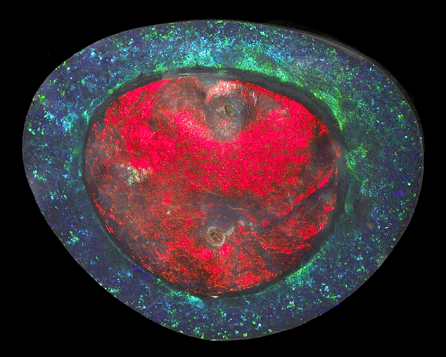
The Aurora Australia is the most valuable black opal in the world. The gem was found in Lightening Ridge, in NSW. Altmann & Cherny brought it in a semi rough state and they later cut and polished it into a harlequin pattern. The opal has a black background, interspersed with green, blue and red colours. The gem was named Aurora Australis after the southern lights. The value of the gem is estimated at AUD1,000,000.
The Queen’s Opal
The Queen’s Opal
The Queen’s Opal, also known as the Andamooka Opal, was chosen by the government to present to Queen Elizabeth II when the queen was slated to visit Australia for the first time. It shone with blue, green and red colors, and was later set into a palladium necklace.
The Pride of Australia
The Pride of Australia, or Red Emperor, was discovered in 1915 at a mine known as Phone Line. It is called the Pride of Australia because its shape resembles that of the continent. The opal has blue and black veins, interspersed with red streaks. Unfortunately, the Pride of Australia was stolen from a display at the Forest Lawn Memorial Museum in 1961. It has never been recovered.
Halley’s Comet Opal
The Halley’s Comet Opal
The Halley’s Comet Opal was so named because it was mined in 1886, a year that the Halley’s Comet was seen. This uncut black opal, the largest one found to date, was unearthed at Lightening Ridge, NSW.
There have also been many famous people who were enamored with opals.
Andy Warhol, one of the most recognized artists of the modern world, fell hard and fast into his love affair with this magnificent gemstone. He became an avid collector, and in 1977 Warhol featured photos of the
Andy Warhol
gemstone taken through a microscope at his exhibition Opal the Rainbow Gem at the ICA in London.
A Senator of the Roman Republic, Nonius, owned a fabulous Opal. The opal was set in a ring, and is said to have been the size and shape of a hazelnut. Roman General Mark Antony was so entranced by the moving lights within Nonius’ opal, his fascination led him to covet the stone which he sought as a gift for his lover Cleopatra. Antony offered Nonius several times the 2,000,000 Sesterces at which the Opal ring had been appraised, however Nonius refused to sell it, declaring it was his life. Nonius preferred to be banished from Rome losing all he owned, then to part with the opal.
Elvis Opal Ring
A massive 14k vintage opal ring featuring a huge crystal opal surrounded by diamonds, was purchased by Elvis Presley in the early 1970’s. It was worn both on and off stage.
John Davison Rockefeller, America’s first billionaire and the world’s richest man, was taken by the alluring charms of Opals. He paid a record price for the mesmerizing ‘Fire Queen’ Opal.
Sarah Bernhardt was on of the most famous actresses of her time. She commissioned this ruby-eyed snake bracelet and ring (hathphul), inlaid with Opals, for her premiere as Cleopatra.
Last week, as we tried on rings, necklaces and more during the Sapphire & Diamond Extravaganza, I was reminded that truly, this is such an enjoyable profession. There are many aspects that I enjoy. In this case, I’m referring to the fact that I haven’t met many women who don’t enjoy the opportunity to see what “that ring” might look like, or how it feels to be adorned in their favorite gemstone. Some of the incredible Sapphire Rings we tried on can be seen in the new Sappheiros Six collection just added to the site – imagine the Sparkling Sappheiros ring with the Shooting Stars Diamond Bracelet – are you feeling ready for a night on the town yet? But I digress.
Sparkling SappheirosShooting Stars
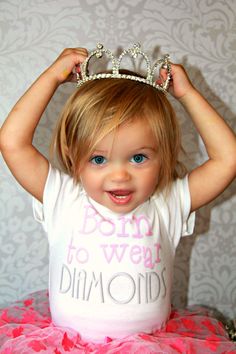
Watching new friends & customers enjoy the jewelry reminded me of a video clip I saw in JCK Magazine recently. Earlier this summer, Harper’s brought a group of young girls, aged 3 to 8, to the famous Van Cleef & Arpels and filmed their reactions as they tried on high-end diamond jewelry. As you might expect, they were enthralled. One of the girls summed it perfectly – “diamonds go with lots of things!” You’ve heard that famous quote, “Diamonds are girl’s best friend”? Apparently little girls are no exception to the rule!
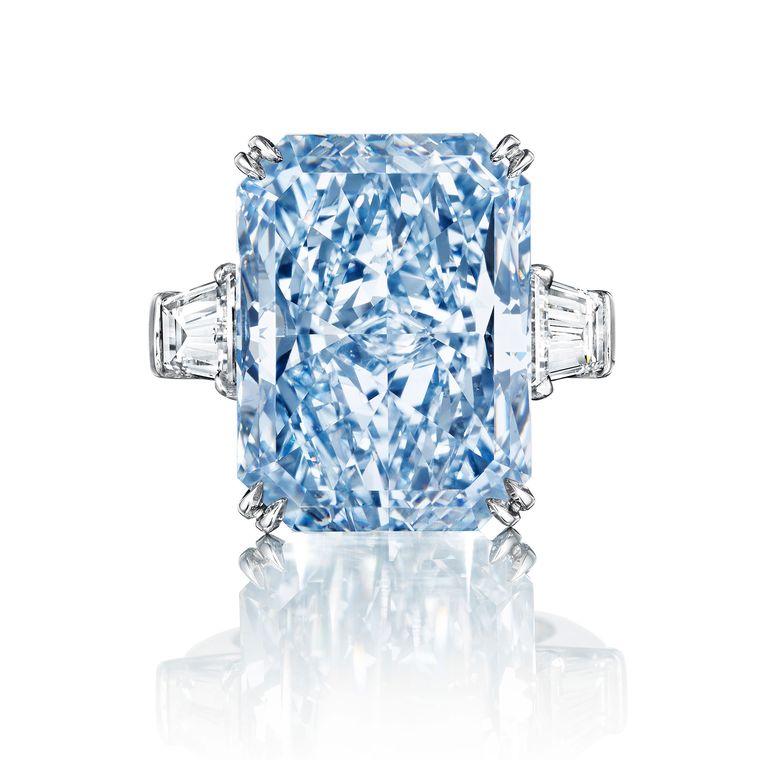
The “Cullinan Dream,” the largest and most expensive fancy intense blue diamond ever sold at auction, fetched $25.3 million Thursday at Christie’s New York Magnificent Jewels sale.
The Cullinan Dream is the largest of the four gems cut from the 122.52 ct rough blue diamond discovered in 2014 at the Cullinan mine in South Africa.
The rectangular-cut diamond is set into a platinum ring inscribed with “Cullinan Dream” and flanked by two baguette-cut diamonds, totalling 2.36ct. The gem is the latest in a string of blue diamonds this auction season. It’s nearly 10 carats larger than the 14.62-carat “Oppenheimer Blue,” which sold for a world auction record of $57.5 million and was previously the largest blue diamond ever sold at auction.
The World Record Oppenheimer Blue
Among those in the audience at auction was Mark Cullinan, the great grandson of Sir Thomas Cullinan, who discovered Petra’s Cullinan Diamond Mine in 1898, where the Cullinan Dream originated. Mark Cullinan said. “My great-grandfather would be delighted to see how one of the newest exceptional blue diamonds from the mine he discovered resonates with top collectors in the market today.”
Fancy Blue Diamonds
Natural Blue Diamonds are very rare…. Since 2008 out of the eighteen million tonnes mined and five million carats recovered, only five world-class blue diamonds have emerged from Cullinan, or less than 0.1 per cent of the mine’s annual yield.
Info from:
Forbes, 24-Carat ‘Cullinan Dream’ Blue Diamond Sells For $25.3 Million, Anthony DeMarco
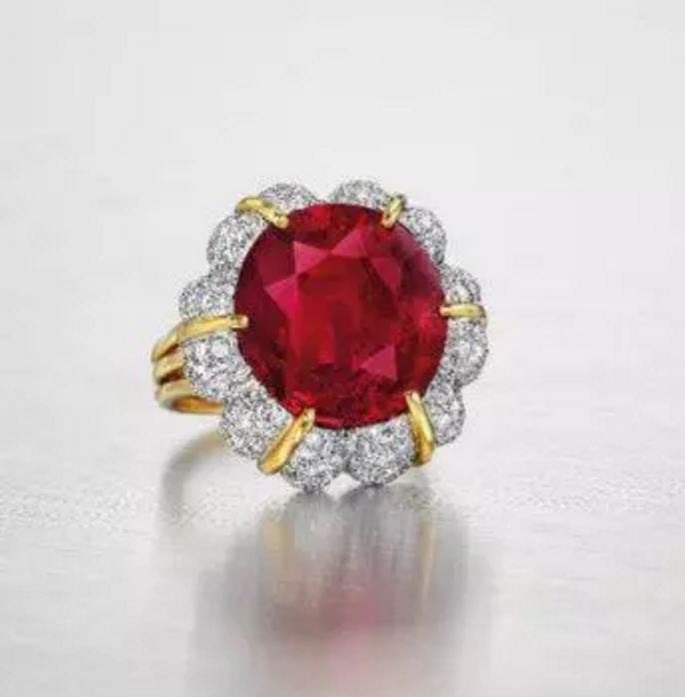
The Jubilee Ruby, a 15.99 ct. Burmese ruby and diamond ring, sold for $14,165,000
Christie’s set a record for the most expensive colored gemstone sold at auction in the United States with its sale of the Jubilee Ruby (pictured) on April 20 in New York.
The 15.99 ct. Burmese ruby and diamond ring by Verdura was estimated to sell for between $12 million and $15 million and fetched a price of $14,165,000. Christie’s disclosed that it was sold to a private European buyer.
“After selling the Jubilee Ruby, the most expensive colored gemstone sold at auction in the United States, we look forward to May 18 in Geneva where we will offer the 14.62 ct. Oppenheimer Blue diamond, the largest fancy vivid blue diamond ever offered at auction, and jewels from the collection of Princess Gabriela zu Leiningen,” said Rahul Kadakia, international head of Christie’s jewelry, in a statement.



 You may have seen Pearls referred to by “grade”: A, AA, AA+, and AAA. But how is that grade determined? Much like the 4 C’s of Diamonds, there are established benchmarks to determine the quality of pearls. Six factors are evaluated in order to determine the quality and therefore the value of pearls. Those factors are size, shape, color, surface, nacre and luster.

 Nacre is the natural substance that a mollusk secretes to protect itself from irritants such as shell fragments, parasites or implanted beads. It is a strong, resilient material; lightweight and transparent, allowing light to pass through its surface. A thin layer of nacre will cause the pearl to have a dull, chalky appearance.